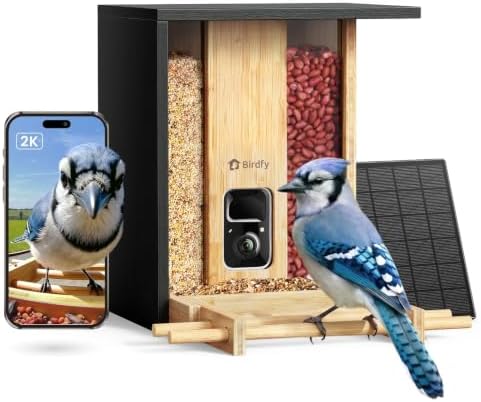
A bird feeder with a camera turns a quiet corner of your yard into a front-row seat, catching close-up video every time a cardinal or chickadee stops by and often naming the bird for you on the spot. But the cheap ones film blurry clips, miss the visitors that matter, and quietly park the best features behind a monthly fee. We analyzed thousands of verified buyer reviews, recent sales data, and expert evaluations to find seven camera feeders that capture birds worth watching and keep running with almost no fuss.
Every product we compared, in ranked order. Tap through to Amazon to check today's price, or jump to the full review below.
1
NETVUE Birdfy Battery
Best Overall27% OFF
NETVUE by Birdfy Smart Bird Feeder Camera (Battery, AI by Subscription)
5.0
2K HD video · battery powered · 1.5L capacity
Our Best Overall pick: a battery-only Birdfy with a trusted 2K camera, AI identification and the simplest setup in this comparison. No solar panel to position, just mount it and go, at a price that undercuts most rivals here.
Our Best Affordable pick: a solar-powered 2K camera feeder that pairs sharp AI-assisted footage with an easy stake mount at the lowest price in this comparison.
NETVUE by Birdfy Smart Bird Feeder Camera (Solar, 2K, Color Night Vision)
4.9
2K HD video · solar + battery · color night vision
The solar-charged upgrade over its battery-only sibling: the same trusted 2K Birdfy camera and AI, plus a panel for hands-off charging, color night vision and smart-home compatibility.
4K UHD video · solar + battery · AI included for life
An all-metal, chew-resistant camera feeder with a 4K UHD lens and species identification included for life, so naming birds never comes with a recurring fee.
Kiwibit BW512 Smart Bird Feeder with Camera (4K, Lifetime AI)
4.7
4K UHD video · lifetime AI included · 1.5L capacity
A 4K UHD camera feeder built around Kiwibit's Lifetime AI plan, so species identification and cloud alerts never require an ongoing subscription. Independent reviewers praised the sharp footage and two-way audio, though it costs more than most feeders in this comparison.
onlyfly Bird Feeder with Camera (Solar, 2K, Multi-Feeder Bundle)
4.6
2K live feed · solar powered · multi-feeder bundle
Our Best for Multiple Bird Species pick: a plastic-bodied solar feeder that ships with extra hummingbird nectar cups, fruit holders and a jelly feeder in the box, aimed at buyers who want to attract more than just seed-eating species from one setup.
NETVUE by Birdfy Bamboo Bird Feeder Camera (Solar, 2K)
4.6
2K HD video · solar + battery · 3.5L capacity
The eco-styled NETVUE swaps in carbonized bamboo construction and the category's largest seed hopper, paired with the same 2K camera and AI identification as its plastic NETVUE siblings.
Short on time? These three cover most buyers: the battery-only NETVUE by Birdfy as our Best Overall pick, the solar HEAPETS 2K feeder as the most affordable way to start, and the onlyfly solar bundle that adds hummingbird, fruit and jelly feeders to draw more than just seed-eating species.
Best Overall
NETVUE Birdfy Battery Feeder
NETVUE by Birdfy Smart Bird Feeder Camera (Battery, AI by Subscription)
Bird Feeder Cameras 101: What They Do & How to Choose
Understand the category before you buy - what the science actually says, and which specs matter.
Every camera feeder promises live video and instant bird alerts, but the resolution, the way it identifies species, and how it stays powered separate the ones you will love from the ones you will unplug by spring. Here is how they work, the one detail most shoppers miss about the AI that names your birds, and the features actually worth comparing.
What does a bird feeder with camera actually do?
A camera feeder is a regular seed feeder with a weatherproof camera pointed at the perch. When a bird lands, a motion sensor wakes the camera, records a short clip or photo, and pushes an alert to an app on your phone over your home WiFi. Many models then run that footage through species-recognition software that tries to tell you which bird just visited.
In practice that means a camera feeder:
Streams live video and captures clips or stills when birds arrive
Sends arrival notifications to your phone
Identifies the species on many models, drawing from libraries as large as 6,000 or 10,000 birds
Films after dark on models with night vision, some in color
Stores footage on the cloud or a memory card for later viewing
The camera and its AI are the whole reason to buy this, so judge those first
A camera feeder only earns its price over a plain feeder if the footage is worth keeping and the bird-naming actually works, so start there before anything else.
Resolution sets how sharp those close-ups look. Most feeders in this lineup ship with a 2K HD camera, which resolves feather detail well beyond basic 1080p systems and is the resolution most testers call the sweet spot for everyday backyard footage; the Birdfy All-Metal steps up to true 4K UHD for buyers who want the sharpest possible frame. If you want footage after sunset, look for night vision specifically: models like the Birdfy All-Metal and the pole-mount RichBird Reelook add color night vision, so an owl or a late finch still comes through instead of a dark smudge.
The species recognition is the other half, and it hides a cost the box does not shout about on most models: AI identification usually runs on an ongoing subscription or a short free trial rather than a true lifetime-free plan. The NETVUE and onlyfly models in this lineup label their AI as subscription based. The Birdfy All-Metal and the pole-mount RichBird Reelook are the exceptions here, bundling AI identification at no extra cost with no ongoing plan required. Before you buy, check whether the listing includes a lifetime plan or budget for an ongoing fee if species identification is the feature that sold you on the feeder, and treat any free trial period as a preview rather than the long-term cost.
Which specs actually matter?
Once the camera and AI check out, a few features decide which feeder fits your yard:
Video resolution: The clarity lever. 1080p is fine for casual watching, 2K is the sweet spot most feeders in this lineup use for sharp, feather-level detail without extra cost, and the Birdfy All-Metal steps up to full 4K UHD.
Night vision: Only some models film in the dark. Look for it by name, like the color night vision on the Birdfy All-Metal and the RichBird Reelook, if you want evening and early-morning visitors.
AI identification and cost: Confirm whether species ID is free, trial-based, or by ongoing subscription. Most feeders in this lineup run full AI identification on a subscription, while the Birdfy All-Metal and the pole-mount RichBird Reelook bundle AI identification at no extra cost with no ongoing plan.
Power source: Solar keeps the feeder running without you fetching it to recharge. Most models here pair a solar panel with a rechargeable battery, while the base NETVUE 2K is battery only with no panel.
Seed capacity: This sets how often you refill. Capacity here ranges from 1.25 liters up to 1.8 liters on the onlyfly feeders, so a larger hopper means fewer trips outside.
Storage: Check whether clips save to the cloud or a memory card. A free cloud-storage tier spares you a recurring storage fee or a card to manage.
Mounting and build: Most use weather-resistant ABS and offer pole, tree, or wall mounting, while the HEAPETS uses a ground stake and the onlyfly All-Metal swaps in a rust-resistant metal body, so match the mount and material to where you want to watch.
How we grade products
Graded Picks rankings are aggregated from several independent signals: verified buyer ratings and the size of the review base for credibility, recent monthly purchase volume for relevance, assessments from trusted birding and outdoor publications, and how each product places in leading category lineups. For camera feeders we weigh:
Video resolution and image quality
Night vision capability
Accuracy of species identification, and whether it is free or subscription based
Power and how reliably solar keeps it running
Seed capacity and refill frequency
Storage options and any ongoing fees
Weatherproofing, mounting, and build quality
Placement and upkeep note: A camera feeder only works as well as its WiFi signal, so mount it within reliable range of your router and where the perch faces even light rather than harsh backlight, which washes out both the video and the species recognition. Clean the feeding tray and keep the solar panel free of debris so it charges fully, and refill before the hopper runs empty to keep birds, and footage, coming back.
In-Depth Reviews
Everything we learned from buyer reviews and expert testing, product by product.
NETVUE Birdfy Battery
Best Overall27% OFF
1. NETVUE by Birdfy Smart Bird Feeder Camera (Battery, AI by Subscription)
5.0
Our Best Overall pick. This NETVUE by Birdfy combines a low price with the strongest all-around mix of buyer approval, independent testing coverage and everyday convenience in this comparison. It skips the solar panel entirely and runs on its internal battery alone: testers and owners across the Birdfy line report battery life measured in months rather than weeks, so periodic recharging is a minor chore rather than a daily one, and it works confidently on a shaded balcony, covered porch or apartment railing where a solar panel would struggle to get enough light. It shares the reliable 2K camera and AI species identification (by subscription, covering thousands of species) with the rest of the Birdfy range, plus two-way audio, app-based alerts and a longer-than-average warranty. The main compromises: no color night vision, and the included baffle offers only modest squirrel deterrence on its own.
Video resolution2K HD
AI bird identification6,000+ species (Birdfy app, AI by subscription)
2. HEAPETS Smart Bird Feeder with Camera (Solar, 2K)
4.9
Our Best Affordable pick. At $59.98 after a discount at our scan, the HEAPETS is the lowest-priced camera feeder in this comparison, and it still brings solar power and a 2K camera. Its 2K resolution is a clear step up from basic 1080p systems when you zoom in on a still frame, sharp enough to help distinguish similar-looking species by feather detail, and its AI runs on the same identification technology HEAPETS uses across its lineup. Owners report being impressed by how reliably it tracks visit frequency and doubles as an inconspicuous backyard security camera. The solar panel and weatherproof housing are built for set-and-forget outdoor use, and the stake mount makes it one of the easiest feeders here to place away from a fence line. Its main limits next to pricier rivals: a smaller 1.25-liter hopper means more frequent refills during busy migration weeks, and it is a simpler, single-purpose seed feeder rather than a multi-feeder bundle with hummingbird or fruit attachments.
Video resolution2K HD
AI bird identificationAI species identification (HEAPETS app; subscription for extended history)
3. NETVUE by Birdfy Smart Bird Feeder Camera (Solar, 2K, Color Night Vision)
4.9
This is the solar-equipped step up from the battery-only NETVUE by Birdfy above, and it is aimed at buyers with a genuinely sunny mounting spot who want to stop thinking about charging altogether. It keeps the same well-regarded 2K camera, AI species identification (by subscription) and free cloud storage tier as its sibling, then adds a solar panel for continuous top-up, full-color night vision instead of infrared-only, and smart-home compatibility for buyers who want it in a broader home automation setup. Owners across the Birdfy line consistently point to easy setup and a wide, bird-friendly perch as strengths, and the brand's above-average warranty carries over here too. Because the panel needs real direct sun to keep the battery charged, this is the pick when the battery-only sibling's shade tolerance isn't a requirement.
Video resolution2K HD
AI bird identification6,000+ species (Birdfy app, AI by subscription)
This all-metal Birdfy pairs a genuinely sharp 4K UHD camera with AI identification that keeps working for the life of the feeder, no plan required, in a category where nearly every rival eventually asks for a monthly fee. Independent testers describe daytime footage as sharp and true to life, with every feather, eye and beak rendered clearly across the wide 120-degree field of view, and adaptive night vision that shifts from full color to black-and-white as light fades. The chew-proof metal housing is a deliberate upgrade over the plastic bodies common in this category, built to shrug off squirrels rather than just discourage them, and a 9,000mAh battery paired with a solar panel keeps it running through extended cloudy stretches. The honest tradeoff, flagged in hands-on testing against a cheaper rival: video felt slightly less engaging frame-to-frame despite the higher resolution, and the frame rate is capped lower than some competitors. It also carries a thinner track record of buyer feedback than the more established feeders here, though early cross-retailer sentiment has been positive.
Video resolution4K UHD, 120° field of view, adaptive night vision
AI bird identification6,000+ species (Birdfy app, AI Identification Lifetime Free)
Power sourceSolar panel + 9,000mAh rechargeable battery
Seed capacity1.8 liters
Housing materialAll-metal, chew-resistant housing
Mounting typePole, tree or wall mount (hardware included)
Warranty2 years
Pros
AI Identification Lifetime Free - species ID keeps working with no recurring subscription
Sharp 4K UHD footage across a wide 120-degree field of view, per independent testers
All-metal housing resists chewing far better than the plastic bodies common in this category
Adaptive night vision shifts between full color and black-and-white as light fades
9,000mAh battery plus solar keeps it running through extended cloudy stretches
Cons
Highest price in this comparison at our last scan
Frame rate is capped lower than some higher-resolution rivals
Carries a thinner independent track record than the more established feeders in this lineup
Who is it for?
Buyers who never want to think about an AI subscription again and are willing to pay a premium for a sharper, chew-resistant camera feeder.
Who is it not for?
Budget shoppers, and anyone whose yard has never had a squirrel problem worth paying extra to solve.
5. Kiwibit BW512 Smart Bird Feeder with Camera (4K, Lifetime AI)
4.7
This Kiwibit model swaps the subscription-gated AI common across this category for a Lifetime AI plan included at purchase, identifying more than 10,000 species with no recurring fee - a real differentiator in a lineup where most other feeders eventually ask for a monthly payment. Independent reviewers who tested Kiwibit's 4K feeder line, including Digital Camera World, TechRadar and Gear Diary, praised sharp, richly detailed daytime footage and called the roof-integrated solar panel a genuinely clean design, while flagging the camera's minimum focus distance as a minor limitation for extreme close-ups. It adds two-way audio through a built-in speaker, HDR-enhanced 8MP photos alongside 4K video, and an IP65-rated ABS housing rated to work from -4 to 122 degrees Fahrenheit. Power comes from the roof-integrated solar panel paired with a rechargeable battery that also accepts USB-C charging, and wall, pole or tree-strap mounting hardware all ship in the box. The tradeoffs, also noted by testers of Kiwibit's line: squirrel deterrence is minimal on its own, and at $189.99 before discount it sits toward the top of this comparison's price range.
Video resolution4K UHD, 8MP photos, HDR enhancement
AI bird identification10,000+ species (Kiwibit app, Lifetime AI included, no subscription)
Power sourceSolar panel (roof-integrated) + rechargeable battery, USB-C charging
Seed capacity1.5 liters
Housing materialABS, IP65 weatherproof rating
Mounting typePole, wall or tree strap (all included)
Warranty1 year
Pros
Lifetime AI identification included - no recurring subscription unlike most rivals in this comparison
Sharp 4K UHD video and 8MP HDR photos praised by independent testers
Two-way audio through a built-in speaker, uncommon in this category
IP65 weatherproof housing rated for -4 to 122 degF operation
Roof-integrated solar panel plus USB-C charging for flexible power
Cons
One of the pricier picks in this comparison at our last scan
Minimal squirrel deterrence on its own, per testers of Kiwibit's feeder line
Camera's minimum focus distance limits extreme close-up detail, per reviewers
Who is it for?
Buyers who never want to think about an AI subscription again and are willing to pay a premium for sharp 4K footage and two-way audio.
Who is it not for?
Budget shoppers who are comfortable with a subscription-based AI plan, and anyone who needs stronger squirrel deterrence than a plastic-topped feeder offers.
6. onlyfly Bird Feeder with Camera (Solar, 2K, Multi-Feeder Bundle)
4.6
Our Best for Multiple Bird Species pick. The onlyfly stands out in this comparison for what's in the box: alongside the 2K solar camera feeder, it includes two hummingbird nectar cups, two fruit holders and a jelly feeder, so one purchase can draw seed-eaters, hummingbirds and fruit-loving species to the same general area. Reviewers who tested it call setup straightforward and video quality clear for the price, with a loud alarm and light that helps deter unwanted nighttime visitors. The companion app has drawn some criticism for an inconsistent sign-in flow, and its AI identification service is a separate subscription (at least in the neighborhood of $30 a year) that testers found accurate on the large majority of visits but not infallible. The plastic housing keeps the unit lightweight and easy to hang, though it offers less resistance to determined chewing than a metal-bodied feeder would.
Video resolution2K
AI bird identificationAI Identify via companion app (subscription; strong majority accuracy per testers)
7. NETVUE by Birdfy Bamboo Bird Feeder Camera (Solar, 2K)
4.6
The NETVUE Bamboo swaps the brand's usual plastic housing for carbonized bamboo, a material reviewers have called a genuinely sustainable and stylish change from the rest of the category. It carries over the familiar 2K camera and a wide 155-degree field of view, plus AI species identification through a 7-day free trial before it converts to a subscription like most of the lineup. Its standout practical advantage is capacity: at 3.5 liters, its hopper holds more than double most rivals here, meaning far fewer refill trips during busy migration weeks and making it the pick for yards with heavy bird traffic. Reviewers who tested it praised clear video and pleasant audio for hearing birdsong, but flagged real durability tradeoffs: the bamboo's dark top can fade after repeated summer rainstorms, and the built-in siren and light did little to keep squirrels from raiding the feeder or chewing at the wood. A solar panel ships in the box to help offset the 5,000mAh battery's draw, though a reliable WiFi signal at the mounting spot matters more here than on some rivals.
Video resolution2K HD, 155° field of view
AI bird identification6,000+ species (Birdfy app, 7-day free trial then subscription)
Power sourceSolar panel + 5,000mAh rechargeable battery
Seed capacity3.5 liters
Housing materialCarbonized bamboo (rain and mold resistant)
Mounting typeWall, pole or tree mount
Warranty2 years
Pros
Largest seed hopper in this comparison at 3.5 liters - far fewer refill trips
Carbonized bamboo housing gives it a distinct, sustainable-looking design
Clear video and pleasant audio quality for hearing birdsong, per reviewers
Solar panel included alongside the rechargeable battery
Cons
Squirrel deterrence proved largely ineffective in hands-on testing, despite the siren and light
Bamboo's dark top can fade after repeated summer rainstorms, per reviewers
Full AI species identification needs a subscription after the initial trial
Who is it for?
Buyers who want the largest hopper in this comparison and like the look of a wood-styled feeder over plastic or metal.
Who is it not for?
Yards with persistent squirrel pressure or harsh, rainy summers, where a metal or solidly weatherproofed feeder holds up better than bamboo.
The stars you see are the Graded Picks cumulative score, not a single retailer's average. It blends verified buyer reviews aggregated across major retailers, assessments from professional reviewers and expert testers, and how prominently the product features in leading category lineups.
Advertising Disclosure
Our rankings are compiled by aggregating several independent signals, including verified buyer feedback, how popular a product currently is with shoppers, and evaluations published by professional reviewers. Editorial opinions are our own.
Please note that we participate in affiliate marketing programs. When you purchase through links on our site, we may earn a commission. As an Amazon Associate we earn from qualifying purchases. This comes at no additional cost to you and helps support the resources required to provide valuable content.