A dash camera sits quietly on your windshield until the one moment you need it, then it becomes the only witness who tells your side of the story. But not every camera captures a moment worth having, because a cheap one can turn the license plate of a fleeing car into an unreadable smear. We analyzed thousands of verified buyer reviews, recent sales data, and expert evaluations to find seven dash cameras that record footage you can actually use when it counts.
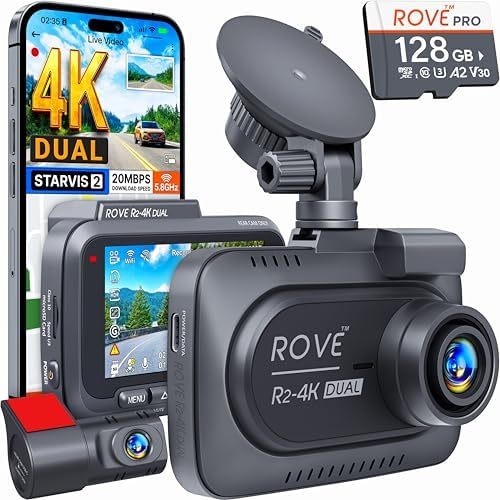
4K front + 1080p rear · 150° + 140° FOV · 128GB card included
Our Best Overall pick: a heavily accessorized 4K front + 1080p rear camera and one of the most expert-reviewed models in this lineup, with a free 128GB card, 5GHz Wi-Fi with up to 20MB/s downloads and up to 1TB storage support.
REDTIGER F7NP 4K Front & Rear Dash Cam (128GB Card)
4.9
4K front + 1080p rear · 170° FOV · 128GB card included
Consumer Reports' top-rated dash cam of 2026: 4K front + 1080p rear with the widest 170-degree front view here, standout f/1.5 night vision, a free 128GB card and an 18-month warranty.
A three-channel system that pairs 4K front recording with a dedicated 1080p infrared cabin camera and a 1080p rear channel, built around a Sony STARVIS 2 IMX675 sensor that testers singled out for sharp, legible plates day and night.
4K single channel · Wi-Fi 6 + GPS · supports up to 512GB
Our Best Affordable pick: a years-proven crowd favorite and the least expensive camera in this lineup. Single-channel 4K recording with Wi-Fi 6, GPS and a supercapacitor build.
A premium three-channel system built around Sony's STARVIS 2 sensor on all three lenses: a 4K front camera, a 1080p infrared cabin camera and a 2.5K rear camera rated IP67 for rain and road spray. Expert testers singled out its license-plate clarity and dependable parking protection.
3K front + 1080p x3 · 560° combined coverage · 128GB card included
It is a true 4-channel system in this comparison, with front, rear and both side cameras combining for 560 degrees of coverage, plus a 3.18-inch touchscreen and voice control for hands-free operation.
A 12-inch touchscreen straps over the rearview mirror for a live wide-angle rear feed while recording 4K ahead and 1080p behind, with six-layer glass optics tuned for night driving.
Short on time? These three cover most drivers: our Best Overall pick with the broadest expert validation and the most complete bundled accessory kit in this lineup, the most affordable 4K pick with a years-proven track record, and the four-channel kit that adds side cameras to the road and rear views.
Understand the category before you buy - what the science actually says, and which specs matter.
Every dash camera promises to protect you on the road, but the resolution it records at, the angles it covers, and whether it keeps watch while you are parked can vary a lot. Here is how they work, why resolution is the spec that decides whether your footage is worth anything, and the features actually worth comparing.
What does a dash camera actually do?
A dash camera is a small video recorder that mounts to your windshield and films the road continuously while you drive. It saves the video in short clips to a microSD card, then loops over the oldest footage once the card fills, so it keeps running without ever needing you to manage the files.
It records the road ahead, and on many models the road behind or the cabin too.
It saves clips automatically to a microSD card and loops over old ones.
A G-sensor locks the clip when it detects a sudden jolt so a crash is not overwritten.
Many models add GPS to stamp your speed and location onto the footage.
Resolution is what decides whether the footage is actually useful
This is the part worth understanding before you buy anything. A crash or a hit-and-run only helps you if the video is sharp enough to read a license plate, and resolution is what captures that detail where a low one turns it into a blur. Higher resolution packs more pixels into the same frame, so the plate on the car two lengths ahead stays legible instead of dissolving into a gray rectangle.
Every camera in this lineup records its front channel at 4K 2160p (or upscaled to it), including the ROVE R2-4K DUAL, the WOLFBOX G840S mirror cam and the single-channel ROVE R2-4K. That is the resolution you want on the road ahead. One thing to know: on front-and-rear kits, the rear channel is almost always 1080p, so the ROVE and REDTIGER dual cameras give you 4K ahead and full HD 1080p behind, not 4K in both directions.
After resolution, decide your coverage. A front-only camera like the single-channel ROVE R2-4K watches the road ahead, which handles most incidents. A front-and-rear setup like the REDTIGER F7NP also captures a rear-end hit, and a 4-channel system like the BOTSLAB G980H adds side cameras on top of that for full-vehicle coverage. If you want the camera to keep recording while parked, check that it supports a parking mode, which every camera here does, but be aware it usually needs a hardwire kit to draw power from your car with the engine off.
Which specs actually matter?
Once you know resolution comes first, a few features decide which camera fits you:
Resolution: This is the lever that makes footage usable. Aim for a 4K 2160p front channel like the ROVE and REDTIGER models; treat 2.7K or 3K as a reasonable step down, and expect the rear channel to be 1080p.
Coverage: Front-only is enough for most drivers, front-and-rear adds protection from behind, and a cabin channel matters for rideshare. Options here run from one channel up to the three channels on the REDTIGER F17.
Field of view: A wider angle captures more lanes and sidewalk. These cameras range from 150 degrees to 170 degrees on the front, with the REDTIGER F7NP and BOTSLAB at the wide 170 degrees end.
Night vision: Many crashes happen after dark, so a strong low-light sensor matters. Several models use a Sony STARVIS 2 sensor with HDR or WDR to hold detail in headlights and shadow.
Parking mode and hardwiring: If you want protection while parked, confirm the model supports parking mode and plan for a hardwire kit, since the standard 12V adapter only powers the camera while the engine runs.
Storage: Higher resolution eats card space fast, so check the maximum the camera supports. Most here take up to 512GB, while the ROVE R2-4K DUAL supports up to 1TB, and several include a card in the box.
Wi-Fi, GPS, and screen: Wi-Fi lets you pull clips to your phone through an app, GPS logs speed and location, and a built-in screen from 2 inches up to a 3.18 inch touchscreen lets you review footage without a phone at all.
How we grade products
Graded Picks rankings are aggregated from several independent signals: verified buyer ratings and the size of the review base for credibility, recent monthly purchase volume for relevance, assessments from trusted automotive publications, and how each product places in leading category lineups. For dash cameras we weigh:
Front and rear resolution and image sharpness
Channel coverage and field of view
Low-light and night performance
Parking mode and hardwiring support
Storage capacity and included cards
App, Wi-Fi, and GPS reliability
Build quality and overall value for the price
Installation and legal note: Parking mode needs a hardwire kit that taps your fuse box, so have it installed professionally if you are not comfortable working with your car's wiring, and choose a kit with low-voltage cutoff so it will not drain your battery. Mount the camera where it does not block your view, and check your local laws before recording, since some places restrict windshield-mounted devices or require notice when a cabin camera records passengers.
In-Depth Reviews
Everything we learned from buyer reviews and expert testing, product by product.
Our Best Overall pick, the ROVE R2-4K DUAL is a clear market favorite - 25% off at our last scan - that holds up under the broadest expert scrutiny in this lineup. PCWorld called it "nice features at a nice price," and testers at Tom's Guide, TechGearLab and Vortex Radar all praised its top-notch daylight capture and coverage. The package is unusually complete: a 128GB ROVE PRO card ships in the box, GPS logs speed and location, the supercapacitor design handles heat and cold, and 5GHz Wi-Fi moves clips to the app at up to 20MB/s. The honest expert caveats: reviewers found its low-light footage trails the best night performers, and the front sensor records at 1440p upscaled to 4K rather than native 2160p. TechGearLab also clocked a fairly involved first install at around 32 minutes for both cameras. Even so, the combination of broad expert validation, accessories and a 150-degree front plus 140-degree rear view makes it the most complete, out-of-the-box-ready package here for drivers of any experience level, and ROVE's comprehensive manual and support draw consistent praise.
Video resolution4K 2160p front + 1080p FHD rear
Image sensorSony STARVIS 2 CMOS, f/1.5, HDR
Field of view150° front + 140° rear
Screen3" IPS
Storage128GB card included, supports up to 1TB
Connectivity5GHz Wi-Fi, GPS, app control
Warranty1 year
Pros
Built-in GPS logs speed and location onto footage
Free 128GB card, suction and sticky mounts, and cable kit all in the box
Excellent daylight video quality validated by multiple expert testers
5GHz Wi-Fi downloads up to 20MB/s; supports up to 1TB cards
Supercapacitor design rated for extreme heat and cold
Cons
Night footage trails the best low-light performers in expert tests
"4K" is upscaled from a 1440p sensor, not native 2160p
24-hour parking mode requires a separately sold hardwire kit
Who is it for?
Most drivers, including first-timers, who want our Best Overall pick: proven front-and-rear coverage with everything included in one box, backed by the broadest expert coverage in this comparison.
Who is it not for?
Drivers who mostly drive at night and want the sharpest possible low-light plates - the WOLFBOX G840S mirror cam's six-layer glass lens tests stronger on night glare suppression - or single-channel buyers who can save with the standard R2-4K featured above.
The F7NP earns the strongest professional endorsement in this lineup: Consumer Reports named it the top dash cam in its 5 Best Dash Cams of 2026, scoring it 72 points for covering every essential - 4K front and 1080p rear recording, integrated GPS and Wi-Fi, and a reliable motion-detecting parking mode - for well under $200. Reviewers at BlackBoxYourCar found the front camera's clarity exceptional, clearly capturing road signs and license plates even at speed, and its f/1.5 aperture with HDR/WDR earned specific praise for night performance. A 128GB card plus an 18-month warranty come in the box. The trade-offs: the most common buyer complaint is a fiddly Wi-Fi/app pairing process, the "4K" output is interpolated from a 2.5K-class sensor, and its 24-hour parking mode needs a separately sold hardwire kit. It remains an easy recommendation for a first dash cam, and the complete kit holds up for drivers of any experience level.
Video resolution4K 2160p front + 1080p FHD rear
Image sensorSony STARVIS 2 CMOS, f/1.5, WDR
Field of view170° front
Screen3.16" IPS
Storage128GB card included, supports up to 512GB
Connectivity5.8GHz Wi-Fi, GPS, app control
Warranty18 months
Pros
Consumer Reports' #1 dash cam of 2026 (72 points)
Widest front view in this lineup at 170 degrees
Strong f/1.5 HDR night vision validated by expert testers
Complete kit: 128GB card, GPS mount and cables included
18-month warranty beats the category's 1-year norm
Cons
Wi-Fi/app pairing is the most common buyer complaint
4K output is interpolated from a 2.5K-class sensor
Hardwire kit for 24-hour parking mode sold separately
Who is it for?
First-time buyers and most drivers: the expert-endorsed safe choice - a complete front-and-rear kit with class-leading night vision that records properly the day it arrives, backed by the strongest professional coverage in this comparison.
Who is it not for?
Drivers who prioritize a slick app experience (pairing gripes are real) and rideshare or delivery drivers who need a cabin-facing interior camera, which this kit doesn't include.
The REDTIGER F17 offers the most complete cabin-inclusive coverage in this lineup, pairing 4K ahead with a 1080p infrared cabin view (4 IR lights) and a 1080p rear channel, which makes it the default recommendation for Uber, Lyft and taxi work as well as everyday drivers who want the fullest record if something goes wrong. Its Sony STARVIS 2 IMX675 sensor drew praise from AutoGuide's testers for capturing license plates, signage and road details with precision, and their bottom line was value: comparable coverage from the segment-leading Viofo A229 Pro costs about $100 more. At $159.99 it costs more than most cameras in this comparison, but the dedicated cabin channel and three-way coverage are what set it apart. Testers' honest gripes: the default G-sensor setting is oversensitive and locks non-emergency files over moderate potholes (it is adjustable), Wi-Fi is direct-connect only with no remote cloud viewing, and 24/7 parking monitoring needs the separately sold hardwire kit. A 128GB card handles roughly 6 to 8 hours of continuous 3-channel loop recording, so consider upgrading the included 64GB card.
Video resolution4K front + 1080p cabin + 1080p rear
Image sensorSony STARVIS 2 IMX675, HDR
Field of view150° front, 3-camera coverage
Screen3" IPS
Storage64GB card included, supports up to 512GB
Connectivity5.8GHz Wi-Fi, GPS, app control
Warranty18 months
Pros
Three channels: road, cabin and rear covered at once
Infrared cabin camera records passengers clearly in total darkness
About $100 cheaper than equivalent Viofo 3-channel coverage per AutoGuide
Sharp STARVIS 2 IMX675 footage praised by expert testers
18-month warranty and 64GB card included
Cons
Default G-sensor is oversensitive and locks files over moderate potholes
Wi-Fi is direct-connect only, no remote monitoring
Included 64GB card is small for 3-channel 4K recording
Who is it for?
Rideshare, taxi and delivery drivers, plus any driver who wants the fullest coverage - road, cabin and rear - in one kit.
Who is it not for?
Everyday commuters who will never use the cabin camera and would rather save money: the front-and-rear REDTIGER F7NP or ROVE R2-4K DUAL cover the same core need for less.
Our Best Affordable pick. The original ROVE R2-4K has spent years on the market proving itself, and at $80.39 it's the least expensive camera in this comparison. It packs features that used to cost twice as much - built-in GPS that PCWorld's testing found connects very quickly, Wi-Fi 6 for phone transfers, h.264/h.265 video options, super night vision, loop recording, parking monitor and a supercapacitor instead of a fragile lithium battery. PCWorld rated its daylight captures as quite good while noting night detail can wash out on bright surfaces when headlights hit them, and dinged ROVE for requiring an account signup to use the app. It's front-only, the 2.4-inch screen is small, and no memory card ships in the box - but as a first dash cam or a second-car camera, the track record speaks for itself.
Video resolution4K 2160p (single channel)
Image sensor8MP CMOS, f/1.5
Field of view150°
Screen2.4" LCD
StorageCard sold separately, supports up to 512GB
ConnectivityWi-Fi 6, GPS, app control
Warranty1 year
Pros
One of the cheapest cameras in this lineup at $80, with years of proven reliability behind it
Proven over years on the market
Built-in GPS and Wi-Fi 6 at a budget price
Supercapacitor build handles temperature extremes
Space-saving h.265 recording option
Cons
Front-only - no rear or cabin coverage
No memory card included, and the app requires a ROVE account
Night captures lose detail on bright surfaces in expert testing
Who is it for?
Budget-minded buyers who want our Best Affordable pick: a years-proven, GPS-equipped 4K cam for the price of a tank of gas, plus anyone outfitting a second car.
Who is it not for?
Anyone who wants rear-end collision coverage - the R2-4K DUAL adds a rear camera and an included 128GB card for about $28 more.
5. Vantrue N4 Pro S 4K 3-Channel Dash Cam (Triple STARVIS 2)
4.7
The Vantrue N4 Pro S is the brand's flagship three-channel dash cam and the first in this lineup to put a Sony STARVIS 2 sensor behind all three lenses: a 4K IMX678 front camera, a 1080p infrared cabin camera with 4 IR LEDs, and a 2.5K rear camera rated IP67 for exposure to rain and road spray. Reviewers at Neowin and autoevolution both credited the adaptive HDR and STARVIS 2 pairing with sharper, more legible license plates and road signage in mixed and low light than older Vantrue models manage, and Gear Diary's hands-on bundle review found the parking-mode protection and overall footage genuinely dependable despite some rough edges elsewhere. A supercapacitor rather than a lithium battery handles power through temperature extremes, a 3.19-inch IPS touchscreen, 5GHz Wi-Fi, GPS and voice control round out the feature set, and the camera supports up to a 1TB card (sold separately). The honest gripes echoed across reviews: the companion app is the weak link and has been reported to drop its Wi-Fi connection, and 24/7 parking monitoring still requires the separately sold hardwire kit. At $359.99 after a 25% discount it undercuts Vantrue's own $459.95 bundle list price, making this the camera for buyers who want the most complete three-sensor coverage in this lineup and don't mind a rough app; buyers who only need front-and-cabin coverage can save money with Vantrue's own N2X elsewhere in this comparison.
Video resolution4K front + 1080p cabin + 2.5K rear
Image sensorTriple Sony STARVIS 2 (IMX678 front), HDR, f/1.8
Field of view165° front, 3-camera coverage
Screen3.19" IPS touchscreen
StorageCard sold separately, supports up to 1TB
Connectivity5GHz Wi-Fi, GPS, voice control
Warranty12 months (18 with registration)
Pros
Only camera in this lineup with Sony STARVIS 2 on all three lenses (front, cabin, rear)
IP67-rated rear camera withstands rain and road spray
Experts praised sharper license-plate and road-sign legibility in mixed light
Supercapacitor build tolerates temperature extremes better than battery-based rivals
3.19-inch IPS touchscreen, GPS, voice control and 5GHz Wi-Fi all included
Cons
Companion app is the weak link and has been reported to drop its Wi-Fi connection
24/7 parking mode still needs the separately sold hardwire kit
No memory card included - a 1TB-capable mount means budgeting for a large card separately
Who is it for?
Buyers who want the most complete three-sensor coverage in this lineup - front, cabin and a waterproof rear - from an established premium dash cam brand.
Who is it not for?
Anyone put off by a finicky companion app or who doesn't need a dedicated cabin camera; the REDTIGER F17 or Vantrue's own N2X cover similar ground for less.
The BOTSLAB G980H is the only camera here that watches all four sides of the car at once, adding two 120-degree side cameras to the usual front-and-rear pair for a combined 560 degrees of coverage. Testers at Security Cam Reviews and CarXplorer found the front camera's 5MP sensor and f/1.8 aperture kept license plates and street signs legible in both daylight and low light, while Android Authority and NerdTechy praised the 5.8GHz WiFi link for moving clips to the companion app noticeably faster than older 2.4GHz dash cams. A 3.18-inch touchscreen and voice control handle settings without digging through menus, and a free 128GB card ships in the box. The important caveat from hands-on testers: motion-triggered Sentry Mode only arms the front camera, so an approach from the side or rear will not wake the system, and like every camera in this comparison, genuine 24/7 parking surveillance needs a separately sold hardwire kit. At $199.99 after a 26% discount it is a fair price for the widest coverage angle here, though it is also the newest arrival with the thinnest track record so far.
Video resolution3K front + 1080p x3 (2 sides + rear)
Image sensor5MP CMOS, f/1.8
Field of view170° front + 120° sides + 150° rear
Screen3.18" touchscreen
Storage128GB card included, supports up to 512GB
Connectivity5.8GHz Wi-Fi, GPS, voice control
Warranty1 year
Pros
Only true 4-channel system here: front, rear and both sides eliminate the most blind spots
5MP front sensor with f/1.8 aperture keeps plates legible in daylight and low light per testers
5.8GHz Wi-Fi moves clips to the app noticeably faster than older 2.4GHz cameras
Free 128GB card and voice control included
3.18-inch touchscreen simplifies settings versus button-only rivals
Cons
Motion-triggered parking detection only arms the front camera per testers
24-hour parking mode still requires a separately sold hardwire kit
Newest arrival here with the thinnest track record so far
Who is it for?
Drivers who want our Best for Full Vehicle Coverage pick: the widest possible blind-spot coverage - both sides plus front and rear - in a single kit.
Who is it not for?
Buyers most worried about side or rear parking-lot incidents, since only the front camera triggers motion detection while parked.
Like the Veement in this lineup, the WOLFBOX G840S replaces the factory mirror with a 12-inch IPS touchscreen, but its front camera steps up to true 4K UHD recording. Reviewers at Security Cam Reviews and AutoMedian called the image detail a real jump over older 1080p mirror cams, with plates and street signs reading clearly on review, and Motion Performance Motorsports and Dashcam Discount specifically praised the six-layer glass lens for keeping night footage legible - one of the stronger low-light performances in this comparison. The 12-inch display gives more usable screen than any dash-mounted unit here, functioning almost like a built-in digital rearview mirror, and built-in GPS plus 5.8GHz Wi-Fi round out the package. The honest tradeoffs: the touchscreen's sensitivity is inconsistent for some testers, the app connection occasionally drops, and - as with every camera here - the 24-hour parking monitor needs a separately sold hardwire kit. At $139.99 after a 24% discount, it undercuts the Veement's screen-first approach while adding a full 4K front sensor.
Video resolution4K 2160p front + 1080p rear
Image sensorCMOS, f/1.8, six-layer glass lens
Field of view170° front + 140° rear
Screen12" IPS touchscreen (mirror mount)
Storage32GB card included, supports up to 256GB
Connectivity5.8GHz Wi-Fi, GPS
Warranty1 year
Pros
True 4K UHD front camera - a step up from typical mirror-cam resolution
12-inch display is the largest screen in this comparison
Six-layer glass lens delivers some of the strongest night footage tested here
Built-in GPS and 5.8GHz Wi-Fi for app transfers
Undercuts the price of most other front-and-rear kits here
Cons
Touchscreen sensitivity is inconsistent for some testers
App/Wi-Fi connection occasionally drops per reviewers
24-hour parking mode requires a separately sold hardwire kit
Who is it for?
Drivers who want a genuine 4K mirror-cam upgrade with the largest screen here and strong night performance.
Who is it not for?
Buyers who want a conventional windshield-mounted unit or the widest possible multi-camera coverage - see the BOTSLAB G980H.
The stars you see are the Graded Picks cumulative score, not a single retailer's average. It blends verified buyer reviews aggregated across major retailers, assessments from professional reviewers and expert testers, and how prominently the product features in leading category lineups.
Advertising Disclosure
Our rankings are compiled by aggregating several independent signals, including verified buyer feedback, how popular a product currently is with shoppers, and evaluations published by professional reviewers. Editorial opinions are our own.
Please note that we participate in affiliate marketing programs. When you purchase through links on our site, we may earn a commission. As an Amazon Associate we earn from qualifying purchases. This comes at no additional cost to you and helps support the resources required to provide valuable content.