A GPS dog fence lets you draw a boundary from the sky, so you can give your dog the run of a big yard without burying a single wire or planting flags. But the same satellites that make it so flexible are also its weak spot, because a signal from space is never as steady as a wire in the ground. We analyzed thousands of verified buyer reviews, recent sales data, and expert evaluations to find seven GPS dog fences that hold a boundary you can actually trust.
Every product we compared, in ranked order. Tap through to Amazon to check today's price, or jump to the full review below.
1
PetSafe Wireless
Best Overall
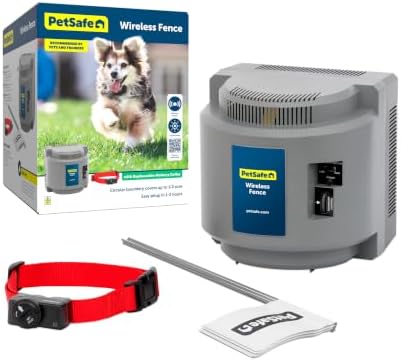
PetSafe Original Wireless Fence (Radio-Signal, Not GPS)
5.0
Radio-signal fence (not GPS) · No subscription · Up to 1/2 acre
Our Best Overall pick: not GPS at all, but a radio-signal wireless fence that holds a rock-steady circular boundary with none of the satellite drift that trips up every GPS system in this comparison, backed by the longest-standing track record in this lineup at a price well below the pricier GPS options here.
PetSafe Stay & Play Compact Wireless Fence (Radio-Signal, Not GPS)
4.9
Radio-signal fence (not GPS) · Up to 3/4 acre · Dogs 5 lbs+
Not a GPS system at all, but an indoor-transmitter wireless fence that holds a rock-steady boundary with none of the satellite drift that affects every true GPS fence in this comparison, plus the lowest minimum dog weight (5 lbs) of anything here.
A 2-in-1 wireless fence and remote training collar that holds a 20 to 500 ft adjustable circular boundary around its indoor transmitter, with no GPS, no app, and no subscription. At $119.92 it is the lowest price in this comparison, pairing beep, vibration, and static corrections across 1-9 levels with an IPX7 waterproof receiver advertised for up to 10 days per charge.
SportDOG Rechargeable In-Ground Fence (Wired, Not GPS)
4.8
Buried-wire fence (not GPS) · No subscription · Up to 1 1/3 acres
Not a GPS system - this is a traditional buried-wire in-ground fence, included here because it appears in the source category, but reviewers consistently rate it among the most durable and reliable containment systems available.
Our Best for Large Properties pick: a rigorously validated GPS fence with dual-band satellite hardware, third-party accuracy testing and an AKC-endorsed track record, scaling from a third of an acre up to 100,000 acres.
A subscription-free true GPS fence with a setup reviewers say takes under 15 minutes and no monthly fee ever, backed by the widest track record of any true GPS option in this lineup, even though it still carries the boundary-drift quirks common to GPS containment.
VUMXPE GPS Wireless Dog Fence (No App, Remote-Only)
4.6
GPS fence · No app, remote-only · Up to 6,561 ft radius
Our Best Affordable pick: a handheld remote controls both a quick circular boundary and a walk-the-perimeter custom shape, with no subscription and no smartphone app required, at the lowest price of any true GPS fence in this comparison.
Short on time? These three cover most buyers: our Best Overall PetSafe Stay & Play wireless fence, the Best Affordable true GPS fence, and the SpotOn Nova for the largest, most demanding properties.
Best Overall
PetSafe Original Wireless Fence
PetSafe Original Wireless Fence (Radio-Signal, Not GPS)
Understand the category before you buy - what the science actually says, and which specs matter.
Every GPS fence promises freedom without digging, but the way each one draws its line, corrects your dog, and holds a charge varies a lot. Here is how the technology works, the one accuracy tradeoff that decides whether it fits your property, and the features actually worth comparing.
What does a GPS dog fence actually do?
A GPS dog fence keeps your dog inside a boundary you set yourself, using a collar that knows where it is from satellites rather than a signal from a buried wire or a plug-in transmitter. You draw the boundary in an app, and when your dog approaches the edge the collar warns them, usually starting with a tone or a vibration and escalating to a mild static correction only if they keep going.
You set the shape and size of the area on your phone, then adjust or move it whenever you need to.
The collar tracks its own position and compares it to that boundary in real time.
As your dog nears the line, the collar delivers a warning cue, then a correction if needed.
Some collars, like the PetSafe Guardian GPS 2.0, add live tracking so you can see where your dog is on a map.
The accuracy tradeoff nobody mentions: satellites versus a fixed line
Here is the honest tension every shopper should understand before buying. A GPS fence draws its boundary from satellites instead of a buried wire or a central transmitter. That is exactly why it is so flexible: you can set a huge, custom-shaped area in the app, from the 1/3 acre up to 100,000 acres the SpotOn Nova covers, or a fully custom, walk-the-perimeter shape for an oddly-shaped lot, and you can pick it up and move it anywhere you travel.
The catch is accuracy. GPS needs a clear view of the sky, and even under good conditions it can drift by several feet. That drift makes the boundary wander in and out slightly rather than holding one fixed line, so a dog standing near the edge might get a warning one minute and not the next. For that reason a GPS fence is best on big, open property with an open sky, and it is a poor fit for a tight suburban yard near a road, where a few feet of wander is the difference between the lawn and the street. If your space is small or hemmed in by trees and buildings, a fixed radio-signal wireless fence like the PetSafe Stay & Play in this guide, or a traditional buried-wire system like the SportDOG model here, will hold a tighter line than any satellite can.
The second half of the picture is how the collar corrects. The models here that start with tone and vibration before any static, like the VUMXPE with its beep-vibration-correction sequence, are the humane and effective ones, because most dogs learn the boundary from the warning alone and rarely reach the static level.
Which specs actually matter?
Containment technology: GPS gives you a movable, custom-shaped boundary; radio-signal wireless like the PetSafe Original gives you a smaller but steadier fixed circle. Match the tech to your property, not the other way around.
Coverage and shape: Ranges run from a 65 ft to 9,840 ft adjustable radius on the generic GPS system up to 100,000 acres on the SpotOn Nova. Look for custom or free-form shapes if your land is not a neat circle.
Correction levels: Prioritize a collar that starts with tone and vibration and only escalates to static, so you can train gently and keep the correction as a last resort.
Rechargeable, waterproof collar: A rechargeable collar like the VUMXPE's or SpotOn Omni's beats hunting for replacement batteries, and a real waterproof rating, from IPX7 up to the SpotOn Omni's IP67, matters for a dog that lives outdoors.
Battery life: Active GPS drains fast, from about 24 hours on some collars to up to 5 days on the PetSafe Guardian, so check the runtime with GPS on, not just standby.
Minimum dog weight: These collars fit dogs from 5 lbs and above on the PetSafe Stay & Play up to 25 lbs and above on the PetSafe Guardian, so confirm your dog clears the floor.
Subscription: Most here need none, but the Guardian GPS 2.0 requires a plan at $9.99 a month for its tracking, so factor ongoing cost into the price.
How we grade products
Graded Picks rankings are aggregated from several independent signals: verified buyer ratings and the size of the review base for credibility, recent monthly purchase volume for relevance, assessments from trusted pet and outdoor publications, and how each product places in leading category lineups. For GPS dog fences we weigh:
Boundary accuracy and how reliably the fence holds its line
Coverage range and custom shape options
Correction design, from tone to vibration to static
Collar battery life with GPS active
Waterproofing and build quality
App experience and setup
Whether a subscription is required, and overall value
Training and safety note: A GPS fence is a training aid, not a substitute for a physical fence, and GPS drift means it can never hold as tight a line as a wire. Introduce it with proper training and always supervise your dog while they learn the boundary. Check the collar fit so it sits snug without being tight, and start with tone and vibration before ever using static. These systems are best for larger dogs on open land, not very small dogs below the collar's weight minimum or aggressive dogs who may bolt through a correction toward a road.
In-Depth Reviews
Everything we learned from buyer reviews and expert testing, product by product.
PetSafe Wireless
Best Overall
1. PetSafe Original Wireless Fence (Radio-Signal, Not GPS)
5.0
It might seem odd for a fixed radio-signal fence to lead a GPS fence comparison, but the PetSafe Original is our Best Overall pick because it nails the one job every other system here struggles with at least a little: holding an exact, unwavering boundary no matter the tree cover, weather, or satellite visibility. A transmitter emits a circular radio signal around your yard, and the collar receiver warns and corrects as your dog nears the edge, with no app and no subscription involved. It's worth flagging clearly since it shares a category page with true GPS fences: this is radio-signal technology, and its boundary is a fixed circle you can't reshape around a pool, garden bed or property line the way a GPS or buried-wire boundary can. What it trades in flexibility it makes up in dependability, since reviewers consistently note it keeps working through conditions that can trip up GPS signals, and it remains one of the most widely reviewed wireless fences on the market. It covers yards up to roughly 1/2 acre, the size of the large majority of yards where GPS drift is a real risk near a property line or road.
2. PetSafe Stay & Play Compact Wireless Fence (Radio-Signal, Not GPS)
4.9
The PetSafe Stay & Play stands out in this comparison because it nails the one job every true GPS fence here struggles with at least a little: holding an exact, unwavering boundary no matter the tree cover, weather, or satellite visibility. It's worth flagging clearly since it shares a category page with true GPS fences: this is radio-signal technology, not satellite-based, and an indoor transmitter broadcasts an adjustable circular boundary up to 3/4 acre (22-105 feet in any direction). The whole system typically sets up in about 1-2 hours with no digging or burying wire involved. What it trades in flexibility it makes up in dependability and fit: the waterproof, rechargeable collar comfortably fits dogs as small as 5 lbs, well below the 8-25 lb minimums on every GPS collar in this lineup, with an adjustable 6-28 inch neck size. A tone-only mode plus 5 levels of static correction let owners dial in training gradually, and the collar runs for roughly 3 weeks on a single 2-3 hour charge. Because the transmitter lives indoors near an outlet rather than on satellites, it sidesteps the tree-cover and drift issues that affect every GPS fence here, though its fixed circular boundary can't be reshaped around obstacles the way an app-based GPS boundary can.
Containment technologyRadio-signal wireless fence (indoor transmitter, not GPS)
Coverage / yard sizeUp to 3/4 acre (22-105 ft adjustable radius)
Subscription requiredNone required
Collar battery lifeRechargeable; up to 3 weeks per 2-3 hour charge
Minimum dog weight5 lbs and above
Waterproof ratingWaterproof collar
Warranty1-year limited warranty
Pros
Holds a rock-steady boundary with none of the GPS drift that affects every true GPS fence in this comparison
Lowest minimum dog weight in this comparison, fitting dogs as small as 5 lbs
Portable indoor transmitter sets up in about 1-2 hours, no digging or burying wire
Rechargeable collar runs up to 3 weeks on a single 2-3 hour charge
Tone-only mode plus 5 adjustable static correction levels for gradual training
Cons
Radio-signal boundary, not GPS - a fixed circle you can't reshape around obstacles
Requires an indoor outlet near the yard for the transmitter
Coverage tops out at 3/4 acre, smaller than several GPS options in this comparison
Who is it for?
Most buyers: anyone who wants the steadiest, most dependable containment in this lineup, GPS or not, including owners of small dogs down to 5 lbs.
Who is it not for?
Owners of large, irregularly-shaped properties who need an app-adjustable GPS boundary or live tracking.
PetCove PawGuard Wireless Dog Fence & Training Collar 2-in-1
3. PetCove PawGuard Wireless Dog Fence & Training Collar 2-in-1
4.8
The PetCove PawGuard pairs a portable 2.4GHz wireless transmitter with a rechargeable collar that doubles as a remote trainer, so one receiver handles both boundary containment and off-leash correction. The fence radius is adjustable from 20 to 500 ft in diameter, which covers a modest yard but, like every wireless signal fence, stays a fixed circle around the transmitter rather than a shape that follows property lines. The collar is built for medium and large dogs, with strap sizing for necks 8 to 23.5 inches and a listed weight range of 15 to 77 lbs, and ships with 10 boundary flags, short and long contact points, and a test tool for setup. PetCove advertises an IPX7 waterproof rating and up to 10 days of battery life per charge, among the longer runtimes in this lineup. Correction is adjustable across 9 levels of static and vibration plus a tone-only setting, and the same collar switches to remote training mode with a toggle on the transmitter. There is no app, no GPS tracking, and no subscription, which keeps ongoing costs at zero but leaves monitoring and boundary adjustments manual.
Containment technologyWireless 2.4GHz signal fence with remote training collar (2-in-1, not GPS)
Coverage / yard sizeAdjustable boundary, 20 to 500 ft diameter (advertised)
Subscription requiredNone required
Collar battery lifeRechargeable; up to 10 days per charge (advertised)
Minimum dog weight15 lbs and up (medium to large dogs)
Waterproof ratingIPX7 waterproof receiver
WarrantyManufacturer limited warranty
Pros
Lowest price in this comparison at $119.92, with a true 2-in-1 fence and remote trainer toggle
Wide adjustable boundary range, 20 to 500 ft diameter, easy to resize as needs change
IPX7 waterproof collar rated for rain, mud, and swimming
Rechargeable collar advertised for up to 10 days per charge, longer than most rechargeable rivals here
1-9 adjustable beep, vibration, and static levels, plus 10 included boundary flags for setup
Cons
Wireless signal fence, not true GPS, so the boundary is a fixed circle rather than a custom-shaped zone
Collar sizing starts at medium dogs (15 lbs and up), not suited to small or toy breeds
No companion app or GPS tracking, boundary and training adjustments are handled on the transmitter itself
Who is it for?
Owners of medium-to-large dogs who want an affordable, no-subscription wireless fence with remote training folded into one collar.
Who is it not for?
Owners of small or toy breeds under 15 lbs, or anyone who wants a true GPS fence with app-based, custom-shaped boundaries.
4. SportDOG Rechargeable In-Ground Fence (Wired, Not GPS)
4.8
Unlike every GPS product in this comparison, the SportDOG Rechargeable In-Ground Fence uses a physical buried wire loop and a transmitter rather than satellites, so it's worth flagging clearly: this is a traditional wired containment system, not a GPS fence, despite appearing in this category's source lineup. That said, independent reviewers consistently praise its durability and reliability over two-plus decades of the SportDOG line, crediting the waterproof collar receiver and a rechargeable battery that runs for weeks on a 2-hour charge. It covers up to 1 1/3 acres out of the box and expands to 100 acres with additional wire-and-flag kits, and SportDOG backs it with a 2-year warranty - a full year longer than most GPS competitors here. The trade-off for that reliability is installation labor: burying wire and placing 100 training flags takes considerably more setup time than pairing a GPS collar with an app.
Our Best for Large Properties pick. SpotOn's Nova Edition backs its reputation with unusually deep independent testing. Reviewers at outlets including Reviewed.com, GearJunkie and OutdoorHub ran it through multi-month, real-world trials on properties ranging from a third of an acre to over 60 acres, and it held boundaries with minimal GPS drift even under heavy tree cover, thanks to a dual-band, dual-feed antenna and a 151-satellite reference network the brand calls True Location. Its coverage scales up to 100,000 acres, by far the largest range of any fence in this comparison, making it the clear choice for sprawling or rural properties where cheaper GPS fences run out of boundary options. It was named the AKC's official GPS collar in 2026, and containment works out of the box with no subscription required (an optional cellular plan unlocks extras like live tracking and heatmapped activity history). The collar is chunky and needs nightly charging at roughly 30 to 33 hours per cycle, and at $999 it's a serious commitment, though reviewers consistently conclude the accuracy and no-subscription containment justify the price for larger or wooded properties where cheaper GPS fences struggle.
6. PetSafe Guardian GPS Dog Fence (No Subscription)
4.6
PetSafe's Guardian GPS fence is the most proven, subscription-free way into true GPS containment in this lineup, with a straightforward setup where dragging a boundary circle over a satellite map and pairing the collar takes most reviewers under 15 minutes. Since there's never a monthly fee, its total cost over several years compares well even though its current list price is no longer the cheapest sticker in this lineup. The waterproof, rechargeable collar runs up to 5 days per charge, and the virtual boundary is portable if you move to a new property. The trade-offs show up in the details: several reviewers report the boundary can drift up to 10 feet in areas with heavy tree cover or metal structures, the elastic collar material can loosen over a full day of wear, and the system needs at least 3/4 acre to work at all, a requirement some buyers say wasn't obvious from the listing.
No subscription fee, ever - keeps total cost predictable over time
Setup reviewers describe as quick and straightforward
Rechargeable, waterproof collar rated for up to 5 days per charge
Portable - the virtual boundary can move with you to a new property
Cons
Reviewers report boundary drift of up to 10 feet under tree cover or near metal structures
Requires at least 3/4 acre of yard to function
Elastic collar material can loosen over a full day of wear
Who is it for?
Owners with 3/4 acre or more who want simple, subscription-free true GPS containment and don't need live tracking.
Who is it not for?
Owners of smaller yards under 3/4 acre, anyone who needs live tracking (the Guardian GPS 2.0 or SpotOn add that), or budget shoppers who want the single cheapest GPS fence available - the VUMXPE option costs far less.
7. VUMXPE GPS Wireless Dog Fence (No App, Remote-Only)
4.6
Our Best Affordable pick. The VUMXPE GPS fence is the least expensive true GPS option in this comparison, and it skips the smartphone app that every other GPS collar here relies on: a handheld remote sets either a quick circular Radius Fence or, by walking the desired boundary once, a custom Multi-Point Fence for oddly shaped yards, adjustable up to a 6,561-foot radius. The IPX7-rated collar is rechargeable via a magnetic charging cable and shows its battery level as a percentage on the remote, though the manufacturer caps daily use at 8 hours per charge cycle. Three correction modes escalate from a warning beep - triggered roughly 10 feet before the boundary line, with no vibration or shock - to vibration and finally a static correction if a dog keeps going, a wider buffer than the tighter-tolerance systems elsewhere in this guide. This appears to be a private-label design: nearly identical hardware turns up under several other brand names on Amazon, and no independent test coverage has been published for VUMXPE specifically, so buyers are trading brand pedigree and phone-based control for the lowest price in this lineup.
Containment technologyGPS virtual fence, radius or multi-point custom shape (remote-controlled, no app)
Coverage / yard sizeUp to 6,561 ft radius (adjustable)
Subscription requiredNone required
Collar battery lifeRechargeable lithium-ion with battery-percent display; daily use capped at 8 hours
Minimum dog weight15 lbs and above
Waterproof ratingIPX7 rated
Warranty1-year manufacturer warranty
Pros
Two boundary modes: an instant circular Radius Fence or a walk-the-perimeter Multi-Point Fence for irregular yards
No smartphone app required - the handheld remote handles setup, corrections and battery status
IPX7 waterproof, rechargeable collar with three escalating correction modes (beep, vibration, static)
Boundary warning starts well before the line (about 10 feet out) as a beep only, with no immediate shock
Lowest price of any true GPS fence in this comparison
Cons
Roughly 10-foot warning buffer is wider than the tighter-tolerance GPS systems elsewhere in this guide, so containment is looser
No independent test coverage found, and nearly identical hardware appears under several other brand names on Amazon
Remote-based control has no phone app, so there's no live tracking or notifications away from the collar itself
Who is it for?
Budget-focused owners who want genuine GPS containment with two boundary-drawing options and don't need phone-based app control.
Who is it not for?
Owners who want the tightest boundary accuracy, live phone-app tracking, or a brand with an established independent testing record.
The stars you see are the Graded Picks cumulative score, not a single retailer's average. It blends verified buyer reviews aggregated across major retailers, assessments from professional reviewers and expert testers, and how prominently the product features in leading category lineups.
Advertising Disclosure
Our rankings are compiled by aggregating several independent signals, including verified buyer feedback, how popular a product currently is with shoppers, and evaluations published by professional reviewers. Editorial opinions are our own.
Please note that we participate in affiliate marketing programs. When you purchase through links on our site, we may earn a commission. As an Amazon Associate we earn from qualifying purchases. This comes at no additional cost to you and helps support the resources required to provide valuable content.