One machine that runs MIG, flux-core, stick, and often TIG sounds like the end of a cluttered shop, and for most people it genuinely is. The catch is that a do-it-all box asks you to understand a little more before you buy, because the same welder can be brilliant on thin sheet and underpowered on a thick trailer hitch depending on how you set it up and where you plug it in. We analyzed thousands of verified buyer reviews, recent sales data, and expert evaluations to find seven multi-process welders that cover the widest range of jobs without pretending to be something they are not.
Every product we compared, in ranked order. Tap through to Amazon to check today's price, or jump to the full review below.
1
ARCCAPTAIN MIG205MP 9-in-1 Welder and Plasma Cutter
Best Overall20% OFF
ARCCAPTAIN MIG205MP 9-in-1 Welder & Plasma Cutter
5.0
205A + 50A plasma · 9-in-1 · 120V/240V
The ARCCAPTAIN MIG205MP packs nine welding and cutting processes, including MIG, flux-core, stick, DC TIG, and plasma cutting, into one dual-voltage machine. App-based setting storage and synergic MIG control make it one of the most capable all-in-one welders available for home shops.
The ARCCAPTAIN MIG200 covers MIG, flux-core, stick, lift TIG, spot, and spool-gun welding at up to 200A on 110V or 220V power. Synergic control and a memory function make it one of the easier multiprocess welders to pick up without prior experience.
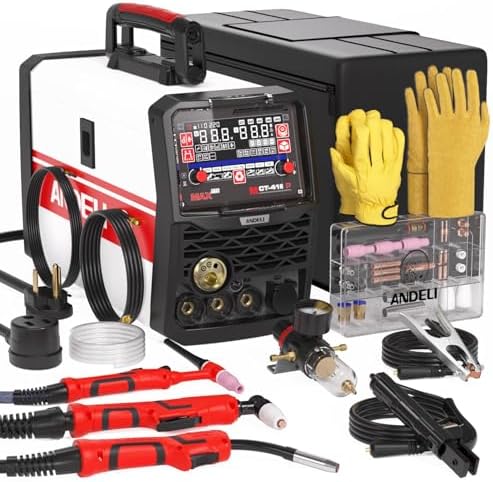
The ANDELI MCT-416P combines pulse MIG, HF TIG, stick, and flux-core welding with a 40A plasma cutter in one 110V/220V machine. A 5-inch LED display and auto-save memory keep it straightforward for hobby and light fabrication work.
The ARCCAPTAIN TIG200P is a dedicated AC/DC pulse TIG welder built for aluminum and steel, with stick welding as a second process. Adjustable AC balance and pulse settings give it more fine control than the brand's multiprocess machines.
The YESWELDER MCT-520 pairs 200A MIG, flux-core, TIG, and stick welding with a 50A plasma cutter, running primarily on 220V with a 120V adapter included. Glove-friendly dials and a large LED display keep the controls simple despite the six built-in processes.
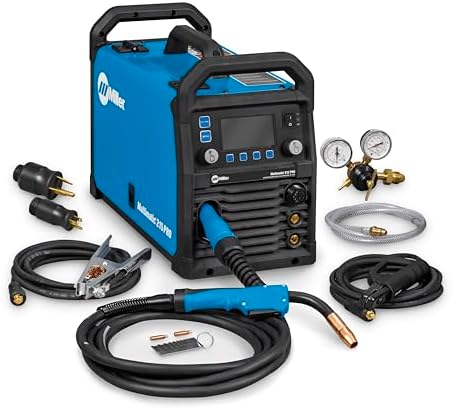
The Miller Multimatic 215 PRO is a professional-grade MIG, flux-cored, stick, and DC TIG welder built for workshops that want Miller's reliability and support network. Auto-Set presets and pulsed MIG/TIG give it finer control than the budget combo machines in this lineup.
The PUWU CT-418PRO delivers 200A MIG, lift TIG, stick, and 50A plasma cutting in one dual-voltage machine for less than most 6-in-1 competitors. It is our Best Affordable pick, a compact, lightweight way to add plasma cutting to a MIG and stick setup without paying a premium.
Short on time? These three cover most buyers: our top-graded pick (a 9-in-1 flagship with pulsed MIG, HF TIG and a built-in plasma cutter), the friendliest all-rounder for beginners (a 200A synergic 6-in-1 that adds spool-gun aluminum), and the most affordable machine here that still covers MIG, flux-core, TIG and Stick (a 160A 4-in-1 at the lowest price in the lineup).
Best Overall
ARCCAPTAIN MIG205MP 9-in-1 Welder and Plasma Cutter
Multi-Process Welders 101: What They Do & How to Choose
Understand the category before you buy - what the science actually says, and which specs matter.
Every welder here promises several processes from one unit, but the honest differences are in amperage, duty cycle, and whether the machine wants shielding gas or runs bare. Here is how these welders actually work, the one tradeoff that decides whether a single box is right for you, and the specs worth comparing before you spend.
What does a multi-process welder actually do?
A multi-process welder is one power source that can run several welding processes, so you switch modes instead of buying separate machines. Most of the lineup uses inverter-based IGBT electronics, which keeps the units light and lets them fine-tune the arc for each process. Depending on the model, one welder can:
Run MIG with a solid wire and shielding gas for clean, fast welds on steel.
Run flux-core (gasless) with a self-shielding wire that works outdoors and in wind.
Run stick (MMA) for thicker metal and rougher, rusty, or outdoor conditions.
Run TIG, either lift-start or high-frequency, for precise, tidy welds on thin steel, stainless, and on some units aluminum.
Several models add extras such as a spool gun port for aluminum, spot welding, or even a built-in plasma cutter, like the ARCCAPTAIN MIG205MP and the YESWELDER MCT-520, which pair welding with a 50A cut.
One machine, several jobs: where a combo shines and where it does not
Here is the thing most shoppers miss. The real value of a multi-process welder is that it replaces a rack of single-purpose machines, running MIG, flux-core, stick, and often TIG from one box for the price and footprint of one. That is a genuinely good deal for a home shop or a mobile setup. But the honest tradeoffs are worth knowing before you buy.
First, each process still needs its own consumables and gas. MIG and TIG want a bottle of shielding gas (plus the right wire or tungsten and, for TIG, filler rod), while flux-core and stick need no gas at all because the wire or electrode shields the weld itself. So a machine that lists MIG and TIG does not mean you are done spending. You will still buy gas, wire, tungsten, and tips per process.
Second, a machine built to do everything rarely matches a dedicated welder's finesse on the hardest jobs. A lift-TIG combo, for example, is fine for general work but will not feel like a dedicated high-frequency AC/DC TIG unit on thin aluminum; the ARCCAPTAIN AC/DC TIG welder in this lineup exists precisely for people who want that focus.
The practical move is to match the amperage and the duty cycle to the metal you actually weld. Duty cycle is how many minutes out of ten the machine can weld before it must stop and cool. In this lineup that means numbers like 60% at 160A on the YESWELDER 160A or 60% at 205A on the ARCCAPTAIN MIG205MP, though real-world tests can trip thermal protection sooner than the advertised figure suggests. Thicker steel needs more amps and a duty cycle that holds up under a long bead, while thin sheet is forgiving. And if you only have a standard household outlet, confirm the welder runs on 110V, because many need 220V for full output. The YESWELDER MIG-205DS PRO, for example, falls from 205A on 220V to 160A on 110V, so check which voltage you will actually use before buying.
Which specs actually matter?
Processes included: Decide which of MIG, flux-core, stick, and TIG you truly need. Most units here cover four or more; the ARCCAPTAIN 205MP stacks nine, including pulsed MIG and plasma cut.
Amperage output: More amps means thicker metal. This lineup ranges from 160A on the budget YESWELDER YWM-160 up to 200A to 205A on the ARCCAPTAIN and other YESWELDER models.
Duty cycle: Read it at the rated amperage, not just the headline number. Most machines here claim 60% at rated output, but real-world testing on the ARCCAPTAIN MIG200 found thermal protection tripping after about five and a half minutes of continuous welding at the full 200A, a reminder that advertised numbers deserve a grain of salt.
Input voltage: Dual 110V/220V (or 120V/240V) models give you flexibility, but check whether full output needs the higher voltage. The ARCCAPTAIN MIG205MP auto-senses 120V/240V.
Gas vs gasless: MIG and TIG need shielding gas; flux-core and stick do not. If you weld outdoors or want a simpler start, lean on the gasless modes.
Weight and portability: IGBT inverters keep these light, from about 19.4 lb on the YESWELDER YWM-160 to 46.2 lb on the ARCCAPTAIN 205MP.
Synergic and digital controls: Auto or synergic settings match voltage and wire speed for you, which flattens the learning curve. Look for a clear LED digital display and features like the ARCCAPTAIN MIG205MP's app-based saved presets.
How we grade products
Graded Picks rankings are aggregated from several independent signals: verified buyer ratings and the size of the review base for credibility, recent monthly purchase volume for relevance, assessments from trusted welding and metalworking publications, and how each product places in leading category lineups. For multi-process welders we weigh:
Range and usefulness of included processes
Amperage output relative to the metal thicknesses it targets
Honest duty cycle at rated output
Dual-voltage flexibility and full-output requirements
Arc quality and ease of setup, including synergic controls
Build quality, portability, and warranty
Overall value for the price
Safety note: Welding produces intense light, heat, fumes, and sparks. Always wear an auto-darkening helmet rated for your process, plus flame-resistant gloves and clothing that cover your skin from ultraviolet burn. Ventilate your workspace well, especially when running flux-core or welding stainless and coated metals, since those fumes are more hazardous. Respect the machine's duty-cycle limits and let it cool when it says to, so you protect both the welder and yourself.
In-Depth Reviews
Everything we learned from buyer reviews and expert testing, product by product.
ARCCAPTAIN MIG205MP 9-in-1 Welder and Plasma Cutter
The MIG205MP runs on 120V or 240V and covers Gas MIG, flux-core, DC lift/HF TIG, MMA stick, spot welding, a cleaning mode, and spool-gun-ready aluminum welding, plus a built-in 20-50A plasma cutter rated for clean cuts up to about 3/8 inch advertised. Welding output ranges from 30-205A on MIG and 20-205A on stick and TIG, with a 60% duty cycle at rated output. A companion app lets users save and recall settings, which the maker says cuts setup time by as much as 80% compared with manually dialing in voltage and wire speed. Synergic technology automatically pairs voltage and wire-feed speed once the operator selects material and thickness, smoothing out setup for less experienced welders. At 21.6 lb it is light enough to move around a garage, though reviewers note the voice prompts can be hard to hear over grinder or compressor noise, and the control layout takes some time to learn.
Nine processes, including MIG, flux-core, stick, TIG, and plasma cutting, in a single machine
App-based setting storage speeds up repeat setups
Synergic MIG control auto-adjusts voltage and wire speed
Dual 120V/240V input works in a home garage or a 240V shop circuit
Built-in plasma cutter adds metal-cutting without a second machine
Cons
Control layout and app pairing take some time to learn
Voice/audio prompts are easy to miss over shop noise
Costs more than single-process hobbyist welders
Who is it for?
Hobbyists and light-duty fabricators who want MIG, TIG, stick, and plasma cutting covered by one machine and are willing to spend time learning the controls.
Who is it not for?
Buyers who only need a single process and want the simplest possible interface.
The MIG200 is a 6-in-1 multiprocess welder rated for 200A output on either 110V or 220V input, with a 60% duty cycle advertised at full power. It handles Gas MIG, flux-core, stick, lift TIG, spot welding, and spool-gun aluminum welding, and reviewers highlight the synergic control that auto-adjusts voltage and wire speed once material and thickness are selected. A digital LED display and memory function store settings for repeat jobs, and a hot/soft start arc plus tack-weld mode help new welders get clean starts without burning through thin material. At 28.2 lb it is light enough to carry between job sites. The main tradeoffs reviewers cite are a thin printed manual, best supplemented with online setup videos, and a duty cycle that limits long production runs, though for hobby and repair work it has been reported to produce clean welds with minimal practice.
The MCT-416P is a 6-in-1 machine rated for up to 160A welding output and a separate 10-40A plasma-cutting circuit, running on either 110V or 220V input. It supports pulse MIG, high-frequency TIG, stick, and flux-core welding, and the plasma side is advertised to deliver clean cuts up to roughly 0.39 inch on 110V and 0.6 inch on 220V. A 5-inch LED display walks through mode, material, wire type, and thickness settings, and an auto-save function stores preferred parameters so repeat jobs do not require redialing everything in. ANDELI backs the machine with CE certification, over-heat and auto shut-off protection, and a 3-year warranty. Its 160A welding ceiling and 40A cutting output put it ahead of entry-level single-process machines but still sized for hobby and light fabrication rather than daily production work.
Unlike ARCCAPTAIN's MIG-focused machines, the TIG200P is built around AC/DC TIG welding, with HF start, lift TIG, spot TIG, and stick welding rounding out the process list. Output runs 10-200A with pulse frequency adjustable from 0.2-200Hz and AC balance adjustable from 30-70%, which lets users fine-tune cleaning action and heat input when welding aluminum. It is rated for a 60% duty cycle at 200A on 240V input and includes over-voltage, over-current, overload, and over-temperature protection. The maker advertises arc ignition as fast as 40ms, versus roughly 200ms on older HF-start machines, for a cleaner start with less tungsten contamination. At 26.5 lb it is portable enough for a home shop, and it ships with a WP26-style torch. Reviewers describe the arc as smooth and stable for both aluminum and steel TIG work, with the AC/DC capability as the main draw over cheaper lift-TIG-only machines.
The MCT-520 is a 6-in-1 machine covering MIG, flux-core, HF TIG, stick, aluminum spool-gun welding, and plasma cutting, with welding output from 20-200A and plasma output from 20-50A. It is built around 220V power but ships with a 120V adapter, and the maker advertises clean plasma cuts up to 5/16 inch and sever cuts up to 5/8 inch. The LED display is sized about 30% larger than the brand's prior models and pairs with physical dials rather than a touchscreen, which reviewers note stays usable with welding gloves on. A smart parameter-matching feature sets wire feed speed automatically once voltage is selected, and separate adjustments for MIG inductance, TIG pulse, and stick arc force let more experienced users fine-tune each process. At 47.3 lb it is noticeably heavier than the other machines in this lineup, more of a stationary shop welder than a grab-and-go unit.
The Multimatic 215 PRO is a 230A multi-voltage welder that runs on 120V or 240V, with Miller's included Multi-Voltage plugs letting users switch input power without rewiring the machine. It covers MIG and flux-cored welding on steel up to 3/8 inch and DC TIG up to 1/4 inch, and Auto-Set technology provides a starting point for voltage and wire speed across every process that can then be fine-tuned manually. Pulsed MIG, Pulsed TIG, BeadVision bead-profile feedback, and program memory add capability aimed at users who already know welding fundamentals and want more control, not just an auto mode. An angled cast-aluminum drive system with a calibrated tension knob is built for guns up to 15 feet, and the machine ships with a 15-foot MDX-100 MIG gun, stick holder and cables, flow regulator, gas hose, and spare contact tips. At 35 lb and a price well above the combo machines here, it is positioned as a professional tool backed by Miller's dealer and support network rather than a budget all-in-one.
Welding ProcessesMIG, flux-cored, stick, DC TIG
Power Input120V / 240V multi-voltage plug system
Welding OutputUp to 230A
Max Material Thickness3/8 in (MIG/stick), 1/4 in (DC TIG)
The CT-418PRO combines gas MIG, gasless MIG, lift TIG, stick welding, and plasma cutting in a 110V/220V machine rated for 200A output on 240V, 130A on 120V, and a 60% duty cycle at 200A advertised. The plasma side runs 20-50A and is advertised to deliver a clean 5/16-inch cut on 220V using shop air, which covers most sheet and light-plate work. At 25.5 lb and roughly 18 inches long, it is one of the more compact and portable machines in this lineup, and it ships with a full set of leads, a 10-foot MIG lead, 13-foot plasma and TIG torches, along with multiple contact tips and drive rollers for steel, stainless, and aluminum wire. Compared with pricier 6-in-1 machines, the CT-418PRO skips HF TIG start and spot welding, but for its price it covers the core processes, MIG, stick, lift TIG, and plasma cutting, that most home and farm shops actually use.
The stars you see are the Graded Picks cumulative score, not a single retailer's average. It blends verified buyer reviews aggregated across major retailers, assessments from professional reviewers and expert testers, and how prominently the product features in leading category lineups.
Advertising Disclosure
Our rankings are compiled by aggregating several independent signals, including verified buyer feedback, how popular a product currently is with shoppers, and evaluations published by professional reviewers. Editorial opinions are our own.
Please note that we participate in affiliate marketing programs. When you purchase through links on our site, we may earn a commission. As an Amazon Associate we earn from qualifying purchases. This comes at no additional cost to you and helps support the resources required to provide valuable content.