The 7 Best Polaris & Robotic Pool Cleaners of 2026
A good pool cleaner is the difference between swimming and skimming. It crawls the floor, climbs the walls, and picks up the leaves and grit you would otherwise be chasing with a net every weekend. But the cheapest cleaners lean entirely on your pool's own pump, while the priciest run on their own motor, and the gap in how well they scrub is real. We analyzed thousands of verified buyer reviews, recent sales data, and expert evaluations to find seven pool cleaners that actually keep a pool swim-ready.
Our Best Overall pick: a feature-forward cordless robot with dual-pass waterline scrubbing and wireless charging, though independent testers are genuinely split on how well it actually cleans.
The value pick: a long-running classic with simple double-jet mechanics and one of the lowest prices in this comparison, though independent testers note it wanders the floor without real navigation.
Corded robotic · floor, walls & waterline · up to 50 ft pools
A plug-in robotic cleaner built for larger pools, with app-controlled scheduling, a double helix brush and cyclonic vacuum technology that holds suction through the full cycle.
The value pick: an updated, triple-jet successor to the classic 280 with a belt-drive mechanism and an auto-reversing valve, at a fraction of the cost of the robotic cleaners here.
Suction-side · HALO debris intake · runs off existing pump
Our Best Low-Maintenance pick: a suction-side cleaner with HALO technology intake that pulls in everything from fine silt to large leaves without a dedicated booster pump or its own motor. It runs directly off your existing pool pump, drawing a fraction of the electricity a pressure-side or robotic cleaner needs.
Polaris Freedom Plus Cordless Robotic Pool Cleaner
4.6
Cordless robotic · floor, walls & waterline · up to 50 ft pools
A cordless robotic cleaner that scrubs floors, walls and the waterline with double helix brushes and cyclonic vacuum technology, independently measured at strong real-world coverage.
Solar robotic skimmer · Surface only · Up to ~2,400 sq ft
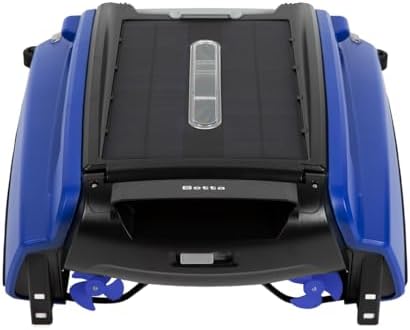
A solar-powered robotic skimmer that patrols the water surface and grabs leaves, bugs and floating debris all day, with no hoses, cords or plugs. It is a different job from the floor-and-wall cleaners here: it will not vacuum the bottom or scrub the walls.
Short on time? These three cover most buyers: our Best Overall cordless robot, the proven pressure-side value option, and the lowest-fuss suction-side cleaner to live with day to day.
Understand the category before you buy - what the science actually says, and which specs matter.
Every cleaner in this lineup promises a spotless floor, but they get there in very different ways, and the type you pick matters more than any single feature. Here is how the three kinds work, why the type is the first decision, and the specs worth comparing once you have narrowed it down.
What does a pool cleaner actually do?
An automatic pool cleaner moves around your pool on its own, dislodging dirt and collecting debris so you are not doing it by hand. Depending on the design, it will:
Vacuum the floor where sediment and sand settle
Climb and scrub the walls, and on the better models the waterline where oils and grime build up
Trap leaves, acorns, and fine grit in a bag, canister, or filter
Run a full cycle and, on many units, shut off or park itself when it is done
The cleaner type is the biggest decision you will make
Before you compare hoses or canisters, decide which of the three types fits your pool, because they work in fundamentally different ways.
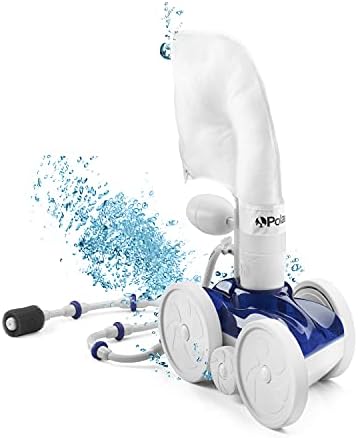
A pressure-side cleaner is a Polaris hallmark. It uses water pressure, often from a separate booster pump, to drive itself around and blow debris up into its own bag. The Vac-Sweep 380 and 280 both work this way and list a booster pump as required. Because the debris goes into the cleaner's bag rather than your pool filter, these handle leaves and large debris especially well.
A suction cleaner is the cheapest type. It connects to your skimmer or a dedicated line and relies entirely on your pool pump to pull dirt into the pool's own filter, which means no separate motor but also more strain on the pump and no debris bag of its own. The Polaris MAXX in this comparison is this type, using its HALO intake to route both fine silt and larger leaves straight into your existing filter rather than a bag of its own, and drawing a fraction of the electricity a pressure-side or robotic unit needs since it has no motor.
A robotic cleaner runs on its own electric motor and filter, completely independent of the pool's plumbing. It gives the best scrubbing with no load on your pump, and the units here, the cordless Polaris Freedom Plus and Freedom, plus the Beatbot AquaSense 2, all clean the floor, walls, and waterline on their own rechargeable battery. Match the type to your pool first, and specifically to whether you already have a booster pump, then compare coverage and, for robotic units, runtime.
Which specs actually matter?
Once you have chosen a type, these are the features that separate the models:
Cleaner type and booster pump: Pressure-side units like the Vac-Sweep 380 and 280 require a pool booster pump. If you do not have one, factor in that cost, choose a robotic cleaner that needs nothing but a power source, or consider a suction-side cleaner like the Polaris MAXX, which runs off your existing pump with no booster and no separate motor at all.
Coverage: Confirm whether a cleaner does the floor only or the floor, walls, and waterline. The robotic Freedom Plus, Freedom, and Beatbot AquaSense 2 all list full floor, wall, and waterline cleaning; the suction-side MAXX covers the floor and walls but not the waterline.
Power draw: The three robotic cleaners here run on a rechargeable battery, so charge time matters day to day. Pressure-side units add the running cost of a booster pump, while the suction-side MAXX draws only a fraction of that power by piggybacking on your existing pool pump.
Runtime and charge time: For cordless robots, check both. The Freedom Plus charges in 5 hours and runs a cycle in 2.5 hours or less, the Freedom charges in 4.5 hours for about a 2.5-hour cycle, and the Beatbot AquaSense 2 runs up to 4 hours of continuous floor cleaning.
Debris bag or filter: Pressure-side cleaners use a bag, from the all-purpose bag on the 280 to the single-chamber debris bag on the 380. Robotic cleaners use an onboard canister or filter, such as the 4-liter canister on the Freedom or the large transparent canister on the Freedom Plus.
Pool size and surface: The Polaris robotic units are rated for in-ground pools up to 50 ft, and the pressure-side Vac-Sweep models suit all in-ground pools using a 31 ft hose.
How we grade products
Graded Picks rankings are aggregated from several independent signals: verified buyer ratings and the size of the review base for credibility, recent monthly purchase volume for relevance, assessments from trusted pool and home publications, and how each product places in leading category lineups. For pool cleaners we weigh:
Cleaning type and how well it suits common pools
Coverage of floor, walls, and waterline
Debris capacity and how easily the bag or canister empties
Runtime and charge time on cordless models
Setup, including whether a booster pump is needed
Build quality and warranty
Overall value for the price
Setup and safety note: A pressure-side cleaner needs the right water pressure to move and scrub properly, so if yours crawls slowly or stalls, check that the booster pump is running and the hose length is set correctly for your pool. Always unplug or fully power down a robotic cleaner before you lift it out of the water, and rinse and dry the filter or bag after each use so debris does not dry on and clog it.
In-Depth Reviews
Everything we learned from buyer reviews and expert testing, product by product.
Beatbot AquaSense 2
Best Overall38% OFF
1. Beatbot AquaSense 2 Cordless Robotic Pool Cleaner
5.0
Our Best Overall pick. The AquaSense 2 packs dual-pass waterline scrubbing, smart surface parking with one-touch app retrieval, 16 sensors aimed at full-coverage path optimization, and a wireless charging dock, a compelling feature list on paper. The independent verdicts diverge sharply, though: a reviewer who has personally tested more than 30 robotic pool cleaners found the suction underwhelming, reporting the unit starts strong but noticeably weakens as the battery drains or the filter fills over a cycle. A separate three-month outdoor test in a Florida pool reached the opposite conclusion, describing effortless wall-climbing and scrubbing a couple of inches above the waterline. Buyers should treat this as a genuinely mixed verdict rather than a settled one.
Power sourceLithium-ion battery (203 Wh), wireless charging dock
Pool compatibilityIn-ground pools, all surfaces
Cycle timeUp to 4 hours continuous floor cleaning
Filtration / debrisOnboard filter
Item weight27 lbs
Warranty3-year full replacement care
Pros
Dual-pass waterline scrubbing in addition to floors and walls
Wireless charging dock, no cable connections to manage
Smart surface parking with one-touch app retrieval
16 sensors aim for full-coverage path optimization
Automotive-grade UV resistance for outdoor durability
Cons
An experienced reviewer who has tested 30+ robotic cleaners found suction noticeably weakens as the battery drains or the filter fills
Performance and coverage feedback is genuinely mixed across independent reviewers
Premium price for a newer brand without the long track record of Polaris
Who is it for?
Buyers drawn to the newest cordless features (wireless charging, smart parking, waterline scrubbing) who are comfortable with genuinely mixed expert opinions on performance.
Who is it not for?
Buyers who want a long-proven track record - Polaris's robotic models have more consistent independent testing behind them.
2. Polaris Vac-Sweep 280 Pressure-Side Pool Cleaner
4.9
The Vac-Sweep 280 is powered by double venturi jets and a 31 ft hose, and its simple mechanics have kept it on the market for decades. Independent reviewers note it moves debris efficiently once running, but without any real navigation system it essentially wanders the pool floor, which can leave inconsistent coverage and missed spots compared to mapped robotic cleaners. It also doesn't clean the waterline, and setup requires a booster pump plus cutting and reassembling the supplied hose - a more involved installation than a plug-and-go robot. Its all-purpose debris bag handles leaves, acorns and larger debris well, and it works across vinyl, fiberglass, gunite, pebble and tile surfaces.
Cleaning typePressure-side, double jet
Power sourcePool booster pump required
Pool compatibilityAll in-ground pools, 31 ft hose
Cycle timeUnder 3 hours per cycle
Filtration / debrisAll-purpose debris bag
Item weight6.2 lbs
Warranty1 year
Pros
Simple, proven double-jet mechanism with decades on the market
All-purpose debris bag handles leaves, acorns and larger debris well
Works on all pool surfaces including vinyl, fiberglass and gunite
No battery to charge or eventually replace
Cons
Wanders the pool without real navigation, so coverage can be inconsistent
Doesn't clean the waterline
Installation requires a booster pump and cutting/reassembling the hose, taking hours versus minutes for a robot
Who is it for?
Owners who already have a booster pump and want a simple, long-proven mechanical cleaner for floor debris.
Who is it not for?
Anyone who wants consistent full-pool coverage or waterline cleaning - a robotic model does both far better.
The PCX 868 iQ pairs a double helix brush design - which channels debris directly toward the inlet as it scrubs - with cyclonic vacuum technology that reviewers note maintains strong, consistent suction throughout the cleaning cycle rather than fading toward the end. The iAquaLink app handles remote start/stop, cycle-timer viewing, mode selection and the lift-system retrieval, with cycle times of about 1.5 hours for a floor-only run or 2.5 hours for a full floor-walls-waterline clean. Because it plugs into AC power rather than running on a battery, there's nothing to charge or eventually replace, and it's backed by a two-year parts-and-labor warranty. It's rated for in-ground pools up to 50 ft, making it a strong match for larger backyard pools.
4. Polaris Vac-Sweep 380 Pressure-Side Pool Cleaner
4.7
The Vac-Sweep 380 updates the long-running 280 with three jet nozzles instead of two and an all-wheel belt-drive mechanism instead of a shaft drive, letting it sweep, scrub and vacuum the floor, walls and steps rather than just the floor. An inline backup valve automatically reverses the unit every three minutes, preventing it from wedging itself into corners, and a Ziploc-style debris bag keeps loose material out of the main chamber for easier maintenance. Owner reports describe strong long-term durability, with one unit lasting roughly a decade with only minor repairs. The tradeoff versus the robotic options here is that it needs a dedicated booster pump - a real added cost - and it doesn't clean the waterline.
Cleaning typePressure-side, triple jet with belt-drive scrubbing
Power sourcePool booster pump required
Pool compatibilityAll in-ground pools, 31 ft hose
Cycle timeUnder 3 hours per cycle
Filtration / debrisSingle-chamber debris bag, auto-reverse every 3 min
Item weight15.3 lbs
Warranty1 year
Pros
Triple-jet, belt-drive design cleans floor, walls and steps
Inline backup valve automatically reverses every 3 minutes to avoid getting stuck
Ziploc-style debris bag simplifies maintenance
Owners report long service life with only minor repairs
Costs meaningfully less than the robotic options in this lineup
Cons
Requires a separate booster pump, adding real cost beyond the sticker price
Doesn't clean the waterline the way a robotic cleaner does
Installation and hose setup take longer than a plug-and-go robot
Who is it for?
Budget-conscious buyers with an in-ground pool who don't mind running a booster pump for reliable floor and wall cleaning.
Who is it not for?
Anyone who wants true hands-free waterline cleaning or a five-minute setup - a robotic cleaner suits that better.
The MAXX earns Best Low-Maintenance by pairing Polaris's HALO technology intake, a wide, unobstructed opening that channels both fine silt and larger leaves and twigs straight into the filtration system, with a suction-side design that plugs into your existing skimmer or dedicated line rather than needing its own motor or a separate booster pump. Independent testing describes it out-cleaning the competing Zodiac MX8 in head-to-head use, with multi-directional navigation and powerful turbines giving it strong wall-climbing reach across vinyl, fiberglass, gunite, pebble and tile surfaces alike. Because it draws off the pool's existing pump rather than running its own motor, it uses a fraction of the electricity of a pressure-side or robotic cleaner, and owners report it noticeably cuts down on manual brushing between cleanings. The tradeoff for that simplicity is a suction adjustment that some owners describe as fussy to dial in correctly, and it can occasionally hang up on a pool's return-jet fitting or step, though not often. Replaceable scrubbing brushes and a regulator valve that manages flow help extend its service life, and it ships with adjustable hose links to fit different pool dimensions.
Cleaning typeSuction-side with HALO debris intake
Power sourceRuns off existing pool pump (no booster pump needed)
Pool compatibilityAll in-ground pool surfaces, 39 ft hose
Cycle timeContinuous while pool pump runs
Filtration / debrisRouted to the pool's own filter via HALO intake
Item weight22.2 lbs
Warranty1 year
Pros
HALO technology intake handles fine silt and large leaves without clogging
Runs off the existing pool pump, using a fraction of the power of a pressure-side or robotic cleaner
No dedicated booster pump or onboard motor to buy, install or maintain
Multi-directional navigation and strong wall-climbing reach across pool surfaces
Owners report it meaningfully cuts down on manual brushing between cleanings
Cons
Suction adjustment takes some fine-tuning to get right, per owner reports
Can occasionally hang up on a return-jet fitting or pool step
Doesn't clean the waterline the way the robotic cleaners in this comparison do
Who is it for?
Pool owners who want effective floor-to-wall cleaning with the lowest power draw and least equipment to maintain in this comparison.
Who is it not for?
Anyone who wants waterline cleaning or the fastest possible setup - the robotic cleaners here handle both better.
6. Polaris Freedom Plus Cordless Robotic Pool Cleaner
4.6
Independent testing over several weeks measured this cleaner achieving roughly 95 percent pool coverage on average, handling both organic debris and artificial test leaves, a genuinely strong result for a cordless robot. It struggled only with a small area around a 90-degree dogleg corner and occasionally left a few leaves behind on shallow-end steps. Four cleaning modes (floor only, floor and walls, waterline only, and an automated SMART cycle) cover most scenarios, double helix brushes channel debris to the inlet, and when the battery runs low it automatically floats to the surface or the pool edge for easy retrieval rather than sinking out of reach. It fully recharges in under five hours for a cleaning cycle of 2.5 hours or less, and reviewers who tested it against the brand's own corded model concluded the cordless freedom is worth the extra cost.
The Betta SE does a job none of the other cleaners in this comparison attempt: it works the surface of the water, collecting leaves, insects and floating debris before they sink and become a floor-cleaning problem. A solar panel keeps its lithium battery topped up, and the maker rates a full charge at about 5 to 6 hours of direct sun for more than 30 hours of cleaning. Twin salt-chlorine-tolerant motors push it across the pool, a remote lets you steer it, and a top-load basket with a 200-micron filter is designed to be emptied every few days. Pool reviewers testing the Betta line found it effective at keeping surface debris down, including in a shaded 20 by 40 foot pool, and note that cloudy stretches reduce charging and runtime. Because it never touches the floor, walls or waterline, it complements a robotic or pressure-side cleaner rather than replacing one, and it suits owners whose main chore is skimming rather than vacuuming.
The stars you see are the Graded Picks cumulative score, not a single retailer's average. It blends verified buyer reviews aggregated across major retailers, assessments from professional reviewers and expert testers, and how prominently the product features in leading category lineups.
Advertising Disclosure
Our rankings are compiled by aggregating several independent signals, including verified buyer feedback, how popular a product currently is with shoppers, and evaluations published by professional reviewers. Editorial opinions are our own.
Please note that we participate in affiliate marketing programs. When you purchase through links on our site, we may earn a commission. As an Amazon Associate we earn from qualifying purchases. This comes at no additional cost to you and helps support the resources required to provide valuable content.