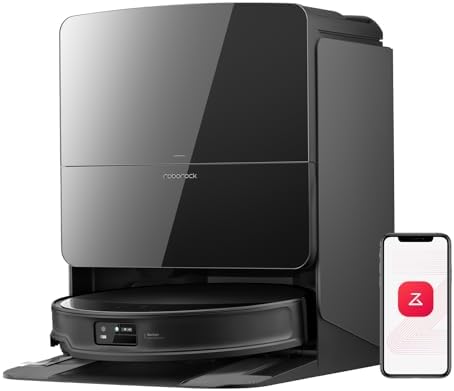
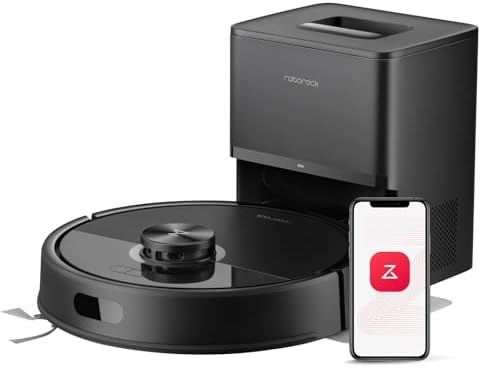
A good robot vacuum turns floor cleaning into something that just happens while you are at work, moving room to room in neat lines and emptying itself into a dock you touch once a month. But the cheap ones wander half-blind, bump around at random, and leave you disappointed that they missed the same corner three days running. We analyzed thousands of verified buyer reviews, recent sales data, and expert evaluations to find seven robot vacuums that actually clean the whole floor and stay out of your way.
22,000Pa suction · 3.14 in slim body · All-in-one dock
Roborock's ultra-slim flagship at 3.14 inches tall, with 22,000Pa suction and StarSight 2.0 solid-state LiDAR that scored a perfect 24 of 24 in expert obstacle-avoidance testing. Multiple testing labs rank it the best robot vacuum of 2026.
Roborock Qrevo S Pro Robot Vacuum & Mop (18,500Pa)
4.9
18,500Pa suction · 180 min runtime · Hot-water mop-wash dock
A mid-priced Roborock that borrows flagship tricks: 18,500Pa suction, LiDAR navigation and a dock that washes the mops in 167°F hot water then dries them with warm air, a feature testers note is rare at this price.
Dreame L40 Ultra Gen 2 Robot Vacuum & Mop, Black (25,000Pa)
4.8
25,000Pa suction · 231 min runtime · All-in-one dock
Tied for the strongest suction in this lineup - 25,000Pa, matched only by its white colorway sibling - with 99% hard-floor pickup in testing, an extendable side brush and mop for edges, a 231-minute battery and a record coverage score of roughly 5,900 sq ft per charge.
Dreame D20 Plus Self-Emptying Robot Vacuum & Mop (13,000Pa)
4.7
13,000Pa suction · 180 min runtime · 5 L self-empty dock
Our Best for Pet Homes pick: an anti-tangle DuoBrush that keeps up with multi-cat shedding where other brands fall behind, 13,000Pa suction - about 3,000Pa above the mid-range average per testers - LDS LiDAR mapping and a 5 L dock bag that goes roughly 150 days between changes, all at one of the lowest prices in this comparison.
8,000Pa suction · 160 min runtime · 90-day self-empty dock
The lowest price in this comparison, it brings 8,000Pa suction, automatic carpet-boost, a dual anti-tangle brush system built for pet hair, and a dock that self-empties for up to 90 days between bag changes.
10,000Pa suction · 150 min runtime · 7-9 week self-empty dock
10,000Pa suction that posted one of the highest scores ever recorded in TechGearLab's testing, reliable PreciSense LiDAR mapping and a self-empty dock that runs 7-9 weeks per bag, at a budget-friendly price in this comparison.
8,000Pa suction · 173 min runtime · All-in-one wash/dry dock
A longtime crowd favorite back in this lineup: dual spinning mops that auto-lift 12 mm on carpet, AI obstacle avoidance and a full wash-and-dry dock at a mid-range price.
Understand the category before you buy - what the science actually says, and which specs matter.
Every robot vacuum promises hands-free floors, but how well one covers your home comes down to how it sees the room, how hard it pulls on carpet, and how much the dock does for you. Here is how these machines work, why navigation quietly decides everything, and the specs actually worth comparing.
What does a robot vacuum actually do?
A robot vacuum drives itself around your home on a schedule, pulling dust, crumbs, and pet hair off hard floors and carpet with a spinning brush and a vacuum motor. Most models in this lineup also mop, wetting a pad or roller to wipe hard floors on the same run. Here is the basic loop:
It maps your space and plans a route through each room.
It vacuums, and often mops, adjusting as it detects carpet versus hard floor.
It returns to its dock to recharge, empty its bin, and on the fancier docks, wash and dry its mop.
The result is a floor that stays consistently clean with almost no effort from you, as long as the robot can find its way reliably.
Why navigation decides whether it cleans the whole floor
This is the part most shoppers overlook, and it matters more than any other single feature. Navigation is what separates a robot that cleans your entire home from one that misses half of it. A model with true mapping, meaning LiDAR or a camera building a picture of your layout, drives in tidy, efficient rows and remembers the plan of your rooms and floors, so it covers everything once and does not waste battery re-cleaning the same stripe. A cheaper bump-and-go robot has none of that memory. It wanders semi-randomly, bumping off walls and furniture, missing spots in one place and going over others twice, and it never really learns your home.
The good news is that every robot in this lineup navigates with real mapping. Most use LiDAR, a spinning laser that measures distance, such as the roborock Q7 M5+ and Q10 S5+ with PreciSense LiDAR and the DREAME D20 Plus with LDS mapping. The roborock Saros 10R goes further with solid-state StarSight and 3D obstacle detection, and the DREAME L40 Ultra Gen 2 uses structured light instead of a camera. Any of these will clean in orderly rows and hold a map across rooms and levels, which is exactly what you want.
Which specs actually matter?
Once you trust the navigation, a few specs decide which robot fits your floors and pets:
Suction power in pascals: This is the muscle, and it matters most on carpet and for pet hair. The lineup runs from 10,000Pa on the roborock Q10 S5+ and Q7 M5+ up to 25,000Pa on the DREAME L40 Ultra Gen 2. More carpet and more shedding pets mean you want a number toward the high end.
Self-empty and self-wash dock: This is the upgrade that turns the robot from something you tend into weeks of genuinely hands-off cleaning. A self-empty dock drops the bin into a bag that lasts a long while, up to 7 to 9 weeks on the roborock Q7 M5+ and about 150 days on the DREAME D20 Plus. Full docks add mop washing and hot-air drying so the pad never sours.
Mopping system: Look at how the mop cleans and whether it lifts on carpet. Options here range from a drag-along pad on the D20 Plus to dual spinning mops with edge reach on the Saros 10R and Qrevo S Pro, both of which add a full self-wash-and-dry dock.
Obstacle avoidance: Cameras and sensors that dodge cords, socks, and pet messes save you from returning to a tangled or smeared robot. Camera-equipped models pair visual detection with laser mapping, while other roborock and DREAME models here use laser and 3D or structured-light sensing alone.
Battery runtime: Longer runtime covers bigger homes in one pass. This lineup spans up to 150 minutes on the roborock Q7 M5+ to up to 231 minutes on the DREAME L40 Ultra Gen 2.
App and voice control: Every robot here pairs with an app for maps, schedules, and no-go zones, and most also take voice commands through Alexa, Google, or Siri.
How we grade products
Graded Picks rankings are aggregated from several independent signals: verified buyer ratings and the size of the review base for credibility, recent monthly purchase volume for relevance, assessments from trusted home and cleaning publications, and how each product places in leading category lineups. For robot vacuums we weigh:
Navigation and mapping quality
Suction power on carpet and pet hair
Dock capability, from self-empty to self-wash and dry
Mopping performance and carpet lift
Obstacle avoidance in real homes
Battery runtime and coverage
App reliability and overall value
Setup and maintenance note: A robot vacuum works best when you prep for it. Clear cords, loose socks, and small clutter off the floor before the first few runs, and use the app to set no-go zones around pet bowls and fragile items. Empty the dock bag on schedule, rinse the mop and dust bin, and wipe the sensors now and then so navigation stays sharp. A little upkeep keeps the hands-off cleaning genuinely hands-off.
In-Depth Reviews
Everything we learned from buyer reviews and expert testing, product by product.
The Saros 10R is our Best Overall pick and the most decorated flagship in this lineup: RTINGS ranks it the best robot vacuum it has tested in 2026, and Vacuum Wars called it the best they have seen so far. Its StarSight 2.0 solid-state LiDAR maps over 21,600 sensor points in real time, recognizes 108 object types and posted a perfect 24 of 24 in obstacle-avoidance evaluations - the exact opposite of the budget experience of lifting cables before every run. Cleaning tests measured 99% Cheerios, 100% kitty litter and 100% pet hair pickup on hardwood, plus 80% of deeply embedded carpet debris against a 75% category average, all from a 3.14-inch body that slips under beds and sofas taller robots bounce off. Testers also singled out how quiet it runs - closer to a white-noise hum than an appliance. It was 44% off $1,299.99 at our last scan. The trade-offs: it is still the priciest machine here even after the discount, and its mopping tested good rather than class-leading.
Suction power22,000Pa
Navigation & sensingStarSight 2.0 solid-state LiDAR + 3D obstacle detection
Mopping systemDual rotating mops with FlexiArm riser for edges
Dock featuresSelf-empty, mop wash, hot-air dry, self-refill
In the boxRobot, multifunctional dock + base, 2 mop modules, dust bag, power cable
Pros
A perfect 24/24 obstacle-avoidance score in testing, recognizing 108 object types
Ranked best robot vacuum of 2026 by multiple testing labs
3.14-inch ultra-slim body cleans under furniture others cannot reach
99-100% hardwood pickup and 80% embedded carpet debris in tests
Notably quiet operation for its power class
Cons
The most expensive product in this lineup even after its 44% discount
Mopping tested good but not class-leading
180-minute runtime is no longer than mid-range models in this lineup
Who is it for?
Cluttered, pet-filled or furniture-dense homes where obstacle avoidance and under-furniture reach matter most - and buyers who simply want the best-tested robot of 2026.
Who is it not for?
Value-focused buyers: the Shark AV2501S, our Best Affordable pick, delivers reliable everyday vacuuming for a fraction of the price, just without mopping or a wash-and-dry dock.
2. Roborock Qrevo S Pro Robot Vacuum & Mop (18,500Pa)
4.9
The Qrevo S Pro is the mid-priced Roborock that expert reviewers keep comparing to flagships, and it is the strongest alternative to our Best Overall Saros 10R for buyers who want hot-water mop hygiene without flagship money. T3 called its cleaning performance high-end for the price, and Basic Tutorials found its LiDAR navigation confident enough to thread gaps only millimeters wider than its body without getting stuck once. In the same tests the 18,500Pa suction cleared oat flakes, rice and coffee beans from hard floors nearly spotlessly, and the liftable dual spinning mops (200 RPM) removed fresh coffee, juice and ketchup stains in a single pass. Its headline trick is the dock: it washes the mop pads in 167°F hot water and dries them with warm air, then self-empties and self-refills - automation reviewers note is rarely found at this price. The honest limits from testing: high-pile carpet holds onto more debris than the big Pascal number suggests, and the dustbin self-empty cycle is loud.
Dock featuresSelf-empty, 167°F hot-water mop wash, hot-air dry, self-refill
Battery runtimeUp to 180 minutes
ControlsApp, buttons, voice
In the boxRobot, multifunctional dock + base, rotating mop module set, power cable
Pros
Dock washes mops in 167°F hot water and hot-air dries them - rare at this price
Testers report confident navigation that threads tight gaps without getting stuck
Near-spotless hard-floor pickup of oats, rice and coffee beans in expert tests
Liftable dual spinning mops clear fresh stains in one pass
Dock also self-empties and self-refills between runs
Cons
High-pile carpet retains more debris than the suction figure suggests
Dustbin self-empty cycle is loud
No discount at our last scan, unlike most rivals here
Who is it for?
Buyers who want genuinely hands-off vacuuming and mopping - especially in mixed hard-floor homes - with hot-water mop hygiene usually reserved for pricier flagships.
Who is it not for?
Homes dominated by thick, high-pile carpet, and bargain hunters - the Q7 M5+ below delivers Roborock basics for less than half the price.
3. Dreame L40 Ultra Gen 2 Robot Vacuum & Mop, Black (25,000Pa)
4.8
The L40 Ultra Gen 2 carries the biggest suction number in this comparison - 25,000Pa - and testing shows it is not just marketing: reviewers measured about 99% debris pickup on hard surfaces and 11.5 CFM of airflow against a 9.0 category average. Its 231-minute battery is tied for the longest here, and on its most efficient setting one lab recorded roughly 5,920 sq ft of coverage on a single charge - the highest score in more than 20 recent vacuum tests. The DuoScrub dual spinning mops and the extendable side brush and mop reach into edges and around chair legs, and the all-in-one dock self-empties, washes and hot-air dries the pads. It was 12% off at our last scan. The catch that holds it back from the very top of this comparison: without the RGB AI camera of the original L40 Ultra, its obstacle avoidance scored just 30% against a 66% category average in testing, so cluttered rooms need a pre-run tidy. This black colorway and the white colorway also in this lineup share identical hardware and test results, so the choice between them is purely cosmetic.
Suction power25,000Pa
Navigation & sensingLDS LiDAR + structured-light obstacle sensing (no camera)
Mopping systemDuoScrub dual spinning mops, extendable side mop
Dock featuresSelf-empty, mop wash, hot-air dry
Battery runtimeUp to 231 minutes
ControlsApp, voice, remote
In the boxRobot, all-in-one dock, filter, mop pads, side brush
Pros
Tied for the strongest suction here (25,000Pa) with ~99% hard-floor pickup in tests
Tied for the longest battery in this lineup: up to 231 minutes
Record ~5,920 sq ft single-charge coverage in lab testing
Extendable side brush and mop clean edges and corners
Full self-empty, wash and hot-air dry dock
Cons
Obstacle avoidance scored 30% vs a 66% category average - clear the floor first
Lacks the RGB AI camera of the original L40 Ultra
Carpet performance trails its excellent hard-floor results
Who is it for?
Tidy, mostly hard-floor homes - everyday dust, tracked crumbs and edge debris are exactly what its power, reach and marathon battery are built for.
Who is it not for?
Cluttered households with cables, toys or pet accidents on the floor - the Saros 10R avoids obstacles far more reliably.
4. Dreame D20 Plus Self-Emptying Robot Vacuum & Mop (13,000Pa)
4.7
Our Best for Pet Homes pick. The D20 Plus targets pet-hair pickup as its greatest strength, with the HyperStream DuoBrush gobbling long dog fur and cat hair without forming tumbleweeds or tangling, and reviewers noting Dreame robots keep up with multi-cat shedding where other brands fall behind. It backs that up with 13,000Pa suction - over 3,000Pa above the mid-range average testers report - at $309.99, one of the lowest prices in this comparison, which reviewers describe as punching above its weight. LDS LiDAR handles mapping and no-go zones, the 180-minute battery covers larger floors, and the dock's 5 L dust bag - the largest here - stretches to roughly 150 days of hands-off collection. The trade-offs are clear: the mop is a simple drag-along pad with adjustable water flow (no washing, drying or lifting), and there is no camera-based obstacle avoidance.
Suction power13,000Pa
Navigation & sensingLDS LiDAR mapping
Mopping systemAttachable drag-along mop pad, adjustable water flow
Dock featuresSelf-empty dock, 5 L bag lasts ~150 days
Battery runtimeUp to 180 minutes
ControlsApp, voice (Alexa, Google)
In the boxRobot, auto-empty dock, mop pad, water tank, side brush
Pros
Our Best for Pet Homes pick: anti-tangle DuoBrush excels at long pet hair where other brands fall behind
13,000Pa suction - well above the mid-range average
One of the lowest prices in this comparison
Largest dock bag here: 5 L, roughly 150 days per change
LiDAR mapping and 180-minute battery at a budget price
Cons
Mop is a basic drag pad - no washing, drying or lifting on carpet
No camera obstacle avoidance, so floors need a pre-run tidy
Dock only collects dust - no mop washing, drying or water refill
Who is it for?
Pet owners who care most about hair pickup and months of hands-off dust collection, at one of the lowest prices in this comparison, with mopping as an occasional bonus.
Who is it not for?
Anyone who wants genuine mopping or carpet-safe wet cleaning - the pad drags everywhere it goes; step up to the eufy X10 Pro Omni or Saros 10R for that.
5. MONSGA MR7 Pro Robot Vacuum & Mop Combo (8,000Pa)
4.7
The lowest price in this comparison. The MR7 Pro is MONSGA's flagship robot vacuum and mop combo, and the lowest-priced product in this lineup. Its 8,000Pa suction automatically boosts on carpet to pull embedded debris out of pile, and the dual anti-tangle system - an arc-shaped side brush paired with an all-rubber main roller - is designed specifically to stop long hair from wrapping, a common complaint with budget robots. The auto-empty dock collects into a 4 L dust bag rated for up to 90 days of hands-off use, and a protective charging plate under the dock helps keep moisture off real wood floors during mopping. Coverage of this newer, lesser-known brand comes mostly from YouTube testers and budget-appliance review blogs rather than the major testing labs that cover the Roborock and eufy models here, so treat its numbers with a bit more caution until wider independent testing catches up. It carried a discount coupon at our last scan.
Suction power8,000Pa
Navigation & sensingLiDAR mapping + obstacle avoidance (no camera)
Mopping systemDual mop pads with protective anti-warp charging plate
Dock featuresSelf-empty, up to 90 days per 4 L dust bag
Battery runtimeUp to 160 minutes
ControlsApp, remote, voice (Alexa, Google)
In the boxRobot, auto-empty station, 2 side brushes, 2 mop pads, spare HEPA filter, remote
Pros
Lowest price of any robot vacuum in this lineup
Dual anti-tangle brush system aimed specifically at pet hair
Automatic carpet-boost suction for embedded debris
Self-empty dock rated for up to 90 days between bag changes
Protective charging plate helps guard wood floors during mopping
Cons
Far less independent professional testing than the established brands in this lineup
8,000Pa is the lowest suction figure here
No camera-based obstacle avoidance - expect to tidy floors before each run
Who is it for?
Budget-first buyers and pet owners who want the lowest price in this lineup, anti-tangle hardware and a long-lasting self-empty dock without paying flagship prices.
Who is it not for?
Buyers who weight independent lab testing heavily - the Roborock and eufy models here carry far broader professional coverage.
The Q7 M5+ pairs strong suction, dependable navigation and one of the lower prices in this comparison: PreciSense LiDAR pairs with 10,000Pa HyperForce suction that TechGearLab measured as one of the highest suction scores it has ever recorded, and TechRadar called it a brilliant budget robot in its own right - reviewers keep landing on the same conclusion, that this is far more capable than its $299.99 price suggests. A 7-9 week self-empty dock means months between bag changes. It is a vacuum-first machine rather than an all-rounder: the VibraRise 2.0 pad handles light film on hard floors but testers rate the mopping mediocre, and there is no pad washing or drying. Lab testing also flagged 43% of long hair wrapping around the brush and real-world battery life falling short of the 150-minute claim. Buyers who want a full wash-and-dry mopping dock should look to the Roborock Saros 10R elsewhere in this lineup, which adds that for more money.
Dock featuresSelf-empty dock, 7-9 weeks per dust bag
Battery runtimeUp to 150 minutes
ControlsApp, voice
In the boxRobot, auto-empty dock, mop module, power cord, moisture-proof mat
Pros
Far more capable than its budget price suggests, according to reviewers
One of the highest suction scores TechGearLab has ever recorded
Self-empty dock runs 7-9 weeks between bag changes
Auto-lifting VibraRise 2.0 pad wipes light film off hard floors
Reliable PreciSense LiDAR mapping at a budget-friendly price here
Cons
Mopping is a basic vibrating pad - no washing or drying
43% of long hair wrapped around the brush in lab tests
Real-world battery life falls short of the 150-minute claim
Who is it for?
Budget-conscious buyers who want strong suction and dependable navigation without paying flagship prices, backed by lab-tested performance.
Who is it not for?
Households that want full wash-and-dry mopping or have long-haired shedders - the Roborock Saros 10R elsewhere in this lineup adds mop washing and stronger anti-tangle hardware for more money.
The eufy X10 Pro Omni pairs a long-standing crowd-favorite reputation with broad professional coverage from RTINGS, TechRadar, Trusted Reviews and Vacuum Wars - the last summing it up as flagship features at half the cost. Its 8,000Pa figure looks modest next to the 20,000Pa crowd, but RTINGS measured carpet deep-clean performance well above average, digging embedded sand out of pile, and reviewers found the dual spinning mops removed stains with the right amount of water and no streaks. The mops auto-lift 12 mm when carpet is detected, AI obstacle avoidance handles everyday floor clutter, and the Omni dock empties the bin, then washes, dries and refills the mop system automatically. At $479.99, it undercuts every other full wash-and-dry dock in this comparison. Honest caveats from testing: the app is buggier and less polished than Roborock's, the dock has a big footprint, and edge cleaning plus taller doorway thresholds are weak spots.
Suction power8,000Pa
Navigation & sensingLaser navigation + AI camera obstacle avoidance
Mopping systemDual spinning mops, 12 mm auto-lift with carpet detection
Dock featuresSelf-empty, mop wash, drying, self-refill
Battery runtimeUp to 173 minutes
ControlsApp, touch, voice (Alexa, Google)
In the boxRobot, Omni station, charging adapter, safety documentation
Pros
Omni dock empties the bin and washes, dries and refills the mops automatically
Above-average carpet deep cleaning in lab tests despite the modest Pa figure
Streak-free stain removal from auto-lifting dual spinning mops
Cheapest full wash-and-dry dock in this comparison
AI obstacle avoidance handles everyday floor clutter
Cons
App is buggy and less polished than Roborock's, with laggy maps
Large dock footprint needs real floor space
Edge cleaning and taller doorway thresholds are weak spots
Who is it for?
Pet households and carpet-heavy homes that want proven deep cleaning and hands-off mop care - at a mid-range price.
Who is it not for?
App perfectionists and small apartments without space for the large dock - and anyone chasing the strongest raw suction numbers.
The stars you see are the Graded Picks cumulative score, not a single retailer's average. It blends verified buyer reviews aggregated across major retailers, assessments from professional reviewers and expert testers, and how prominently the product features in leading category lineups.
Advertising Disclosure
Our rankings are compiled by aggregating several independent signals, including verified buyer feedback, how popular a product currently is with shoppers, and evaluations published by professional reviewers. Editorial opinions are our own.
Please note that we participate in affiliate marketing programs. When you purchase through links on our site, we may earn a commission. As an Amazon Associate we earn from qualifying purchases. This comes at no additional cost to you and helps support the resources required to provide valuable content.