A rowing machine is one of the few pieces of home cardio that works your legs, back, arms, and core in a single smooth stroke, which is why it keeps earning a spot in small home gyms. But rowers are not interchangeable, and the quiet magnetic unit your neighbor loves feels nothing like the roaring air machine at your gym. We analyzed thousands of verified buyer reviews, recent sales data, and expert evaluations to find seven rowing machines that match the way you actually want to train.
Every product we compared, in ranked order. Tap through to Amazon to check today's price, or jump to the full review below.
1
MERACH RS3
Best Overall
MERACH RS3 Sculls Magnetic Rowing Machine (App, 1,000+ Courses)
5.0
Independent scull handles · 16-level magnetic · 1,000+ app courses
A scull-style rower with independent left and right handles that move like real oars, 16 levels of near-silent magnetic resistance, and a companion app stocked with more than 1,000 coached workouts and games.
MERACH Q1S Magnetic Rowing Machine (Manual-Adjust)
4.9
Magnetic resistance · 16 levels · 350 lb capacity
A dependable runner-up: a quiet, sturdy dual-rail magnetic rower with 16 resistance levels and a 350 lb weight capacity, run by a simple manual tension dial that needs no app to start rowing.
Our Best Affordable pick: the lowest price in this comparison, a near-silent foldable magnetic rower that packs down to save roughly 70% of its floor footprint.
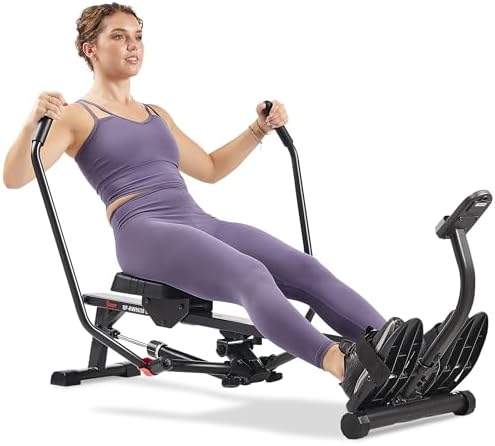
Our Best for Beginners pick: a compact, low-impact hydraulic rower with 360-degree full-motion handlebars and a SunnyFit app that adds guided workouts and scenic routes, covered by mainstream fitness testers.
The machine that effectively defines the category: air-resistance rowing with the PM5 performance monitor, the same setup used in competitive indoor rowing, CrossFit boxes and gyms worldwide.
MERACH R280 Foldable Water Rowing Machine (14L Tank)
4.7
Water resistance, 14L tank · 400 lb capacity · Folds w/ wheels
A wood-frame water rower whose 14-liter tank delivers a natural, effort-scaling paddle stroke, arrives roughly 80% pre-assembled, and folds onto built-in wheels for easy storage.
YOSUDA Magnetic Rowing Machine (Classic, 16-Level)
4.6
Magnetic resistance · 16 levels · 350 lb capacity
One of the quietest rowers in this lineup, with a contoured seat that reduces lower-back pressure, which reviewers repeatedly recommend for people new to rowing.
Short on time? These three cover most buyers: our Best Overall pick, a sturdy magnetic rower with simple manual resistance, the lowest-priced magnetic rower in this comparison, and the beginner-friendly choice with a guided app, compact footprint and longer frame warranty.
Best Overall
MERACH RS3 Sculls Magnetic Rowing Machine (App, 1,000+ Courses)
Understand the category before you buy - what the science actually says, and which specs matter.
Every rower moves you through the same catch, drive, and recovery, but the type of resistance under the hood shapes the feel, the noise, and even the footprint in your room. Here is how the stroke works, why the resistance type matters more than any other spec, and the details worth comparing before you commit.
What does a rowing machine actually do?
A rowing machine simulates the motion of pulling a boat through water. You sit on a sliding seat, push off a footplate with your legs, hinge back through your hips, and finish by drawing a handle to your chest, then reverse the whole sequence. Done in order, one stroke recruits most of the major muscle groups at once:
Legs drive the bulk of the power
Core and back transfer that power through the middle of the stroke
Arms and shoulders finish the pull
A monitor tracks time, distance, strokes per minute, and often calories
That full-body pattern is why rowing builds cardio and muscular endurance together, and why the console matters: watching your split and stroke rate is how you pace a workout instead of guessing.
The resistance type decides almost everything
This is the choice that shapes your entire experience, so understand it before you compare anything else. The rowers here use three different systems, and each one feels distinct.
Air rowers, like the YOSUDA R2, use a spinning flywheel with fan blades. The faster and harder you pull, the more air resistance builds, so the machine scales naturally with your effort and rewards a powerful stroke. The tradeoff is noise: that fan produces a loud whoosh on every drive, which can be a problem in an apartment or a shared room. Air units also tend to be longer - the R2 measures 95 inches deep.
Magnetic rowers, including the MERACH and YOSUDA magnetic models, use magnets near a flywheel to create resistance you set by hand, most commonly across 16 levels here. They are near silent and generally more compact, several sit around 57 to 65 inches deep, which makes them the easy pick when quiet and space both matter. The catch is that resistance stays fixed at whatever level you dial in, so it does not surge when you pull harder the way air does.
Water rowers, like the MERACH R280, spin a paddle through a tank so you feel a smooth pull and hear a soft, satisfying whoosh of moving water. Many people find this the most natural, boat-like feel of all. Resistance is effort based with no fixed levels, building the harder you row. A fourth type, hydraulic, uses fluid-filled pistons, as on the Sunny SF-RW5639SMART here - it trades the smooth, linear feel of the other systems for a smaller, more compact footprint.
Which specs actually matter?
Once resistance type points you to the right family, a few details separate the models:
Resistance type and levels: Pick air for effort-scaling power if you don't mind noise (10 adjustable levels on the YOSUDA R2), magnetic for quiet and compact with set levels like the 16 here, water for a natural feel, or hydraulic for the smallest footprint.
Rail length and your height: The seat rail must be long enough for your legs to fully extend, so fit the tallest person who will use it. The YOSUDA R2 lists a 53.7 inch rail, and taller rowers should confirm the rail suits their inseam before buying; the hydraulic Sunny SF-RW5639SMART trades a full-length rail for a shorter stroke to save space.
Max user weight: Capacities here run from 350 lbs on most models up to about 400 lbs on the MERACH R280 and the Sunny SF-RW5639SMART, so check the ceiling against everyone in the household.
Foldable and storage: If floor space is tight, look for a folding frame like the MERACH R280 or the foldable magnetic model.
Monitor and app: Options span a simple LCD to the self-powered LCD on the R2, plus Bluetooth app support on several for guided workouts and tracking.
How we grade products
Graded Picks rankings are aggregated from several independent signals: verified buyer ratings and the size of the review base for credibility, recent monthly purchase volume for relevance, assessments from trusted fitness publications, and how each product places in leading category lineups. For rowing machines we weigh:
Resistance type and how true the stroke feels
Smoothness and range of resistance
Rail length and comfort for a range of heights
Build quality and weight capacity
Noise level for home and apartment use
Storage, folding, and footprint
Monitor quality and app support
Setup and form note: Rowing injuries almost always trace back to form, not the machine. Drive with your legs first, keep your back straight rather than yanking with your arms, and start with short sessions while you learn the sequence. Give yourself enough clear floor length behind the rail for the seat's full travel, and check that bolts stay tight over the first few weeks of use.
In-Depth Reviews
Everything we learned from buyer reviews and expert testing, product by product.
MERACH RS3
Best Overall
1. MERACH RS3 Sculls Magnetic Rowing Machine (App, 1,000+ Courses)
5.0
The MERACH RS3 stands out on the strength of a genuinely different design: independent scull handles swing through a 120-degree outward arc and can be pulled one arm at a time, letting rowers isolate and correct the kind of left-right strength imbalance a fixed handlebar can mask. Sixteen levels of magnetic resistance keep the stroke quiet enough for shared living spaces, and the machine pairs over Bluetooth with the MERACH app's library of more than 1,000 coached courses, scenic rows and games, plus 6 months of complimentary premium access bundled with purchase. Reviewers covering MERACH's rowing lineup describe the brand's machines as durable, budget-friendly performers that hold up well over repeated use, and the RS3 carries that same alloy-steel frame construction and a 350 lb weight capacity. It arrives mostly pre-assembled, and the honest tradeoffs are a non-backlit display that's harder to read in a dim room and a resistance ceiling built for home training rather than elite-level intensity.
2. MERACH Q1S Magnetic Rowing Machine (Manual-Adjust)
4.9
A strong runner-up pick. The MERACH Q1S is a favorite among magnetic rowers on the strength of consistently positive buyer feedback and a dual-slide-rail steel frame that reviewers repeatedly call sturdy and stable for the price. Smooth, quiet magnetic braking spans 16 resistance levels, and the manual tension dial keeps things simple, with no app pairing required to start rowing. Owners report assembling the machine in well under 30 minutes, and at 45 lbs with a 350 lb weight capacity it strikes a practical balance between sturdiness and portability for a home gym. An LCD monitor tracks the basics, and it is MERACH's simpler, fixed-handlebar sibling to the scull-style RS3 rower elsewhere in this comparison, trading the independent-arm design for a more conventional setup. It earns the top spot here on that combination of buyer trust, sturdy build and simple, fuss-free operation. If you want the authentic feel of water resistance instead, the MERACH R280 elsewhere in this comparison is the water-rowing alternative to compare it against.
Resistance typeMagnetic
Resistance levels16 levels
Weight capacity350 lbs
Item weight45 lbs
Dimensions (D x W x H)65" x 19.3" x 24.8"
Console / displayLCD monitor
Warranty12 months
Pros
Our Best Overall pick: the widest buyer trust among the magnetic rowers here, backed by a sturdy dual-rail steel frame
Frequently discounted to one of the lowest prices among the top-ranked rowers here
Quiet magnetic resistance suits shared living spaces
Simple manual tension dial - no app required to use
Comfortable seat and smooth roller track noted by owners
Cons
Basic LCD display lacks the smart features of pricier models
Some owners note the seat sits low, making it awkward to stand up from
Resistance ceiling caps out below what advanced rowers need
Who is it for?
Rowers who want a sturdy, quiet magnetic rower with simple manual resistance and no smart features to fuss with.
Who is it not for?
Buyers who want built-in app connectivity, guided coaching content, or the independent scull-style handles of the RS3 elsewhere in this comparison.
Our Best Affordable pick. YPOO has built budget fitness gear for close to twenty years, and the RM930 reflects that focus at the lowest price in this comparison: reviewers measure it among the quietest rowers tested, rated under 25 dB, and it folds to save roughly 70% of its floor footprint when not in use. The dual-rail steel frame feels sturdy and stable during workouts despite the entry-level price, and owners describe setup as a straightforward 10-minute job. App support adds basic workout tracking on top of the 16-level magnetic resistance dial. The honest tradeoff is resistance headroom: reviewers agree the top levels suit beginners and intermediates well but will not challenge an experienced rower for long.
Resistance typeMagnetic
Resistance levels16 levels (1-16)
Weight capacity350 lbs
Item weight45 lbs
Dimensions (D x W x H)65" x 17.7" x 23.6"
Console / displayLCD monitor, app support
Warranty12 months
Pros
Among the quietest rowers tested, rated under 25 dB
Folds to save roughly 70% of floor space
Sturdy dual-rail steel frame despite the entry-level price
Simple, fast setup that owners describe as straightforward
Lowest price in this comparison
Cons
Resistance ceiling suits beginners and intermediates, not experienced rowers
Smaller brand with a shorter track record than Concept2 or YOSUDA
Basic console compared to smart-connected rivals
Who is it for?
Beginners and intermediates in small apartments who prioritize near-silent operation, a folding footprint and the lowest price here.
Who is it not for?
Experienced rowers who will outgrow the resistance ceiling within months.
4. Sunny Health & Fitness Smart Compact Full-Motion Rower
4.8
The Sunny SF-RW5639SMART is our pick for people new to rowing. It trades a full-length slide rail for dual hydraulic pistons, which keeps the footprint compact enough for tight spaces while its handlebars rotate a full 360 degrees to mimic the arm angles of on-water rowing. Mainstream fitness publications have tested the broader Sunny rowing lineup and note the SunnyFit app adds guided workouts and scenic routes on top of the machine's 12 resistance levels, which gives new rowers structure from day one. Reviewers describe assembly as around 30 minutes, the elevated, contoured seat is built for easier on/off access, and a 3-year frame warranty is longer than most rivals here. The honest tradeoff experts flag: hydraulic pistons do not replicate the smooth, linear resistance curve of a magnetic or air flywheel, so it suits getting started better than long-term training.
Resistance typeHydraulic (dual piston)
Resistance levels12 adjustable levels
Weight capacity397 lbs (180 kg)
Item weight36.4 lbs
Dimensions (D x W x H)55.7" x 22.6" x 29.1"
Console / displayLCD monitor, SunnyFit app
Warranty3-year frame, 180-day parts
Pros
Compact footprint fits small spaces where a full rail rower won't
The Concept2 RowErg is the industry-standard rowing machine - it's what competitive indoor rowing rankings are set on, and testers describe it as far and away the best rowing machine they've evaluated. The PM5 monitor has been independently measured as accurate to within roughly 0.2-1.9% once a stroke settles into rhythm, which is why serious rowers trust the numbers it displays. Build quality is a recurring theme in expert coverage: the frame separates in half for storage, spare parts remain available years after purchase, and used units routinely resell for 70-85% of their original price because they simply don't wear out. The tradeoff is volume - the air-resistance flywheel runs at roughly 78-82 dB near the flywheel at a moderate pace, louder than every magnetic rower in this lineup.
Resistance typeAir (adjustable damper)
Resistance levels1-10 damper settings
Weight capacity500 lbs (227 kg)
Item weight57.3 lbs
Dimensions (D x W x H)96" x 24" x 14" (separates in half for storage)
Console / displayPM5 performance monitor (LCD)
Warranty5-year frame, 2-year mechanical/PM5 parts
Pros
Independently validated monitor accuracy trusted for competitive training
Exceptional durability and resale value - parts stay available for years
The industry-standard machine used in gyms and competitions worldwide
Frame separates in half for compact storage
No subscription required to use any feature
Cons
Air resistance runs noticeably louder than the magnetic rowers in this lineup
Premium price sits among the highest in this comparison
No touchscreen or immersive workout content built in
Who is it for?
Serious rowers, CrossFitters and anyone who wants the same accuracy-validated machine used in competitions and gyms worldwide.
Who is it not for?
Apartment dwellers who need whisper-quiet operation or casual users who don't need competition-grade tracking.
6. MERACH R280 Foldable Water Rowing Machine (14L Tank)
4.7
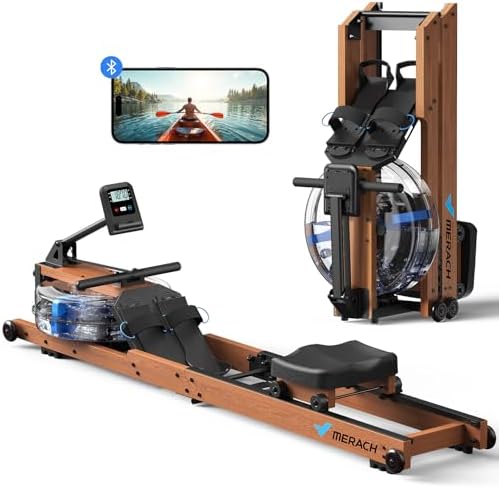
The R280 is MERACH's entry into water rowing, leaning on the same natural, effort-scaling stroke that wins over buyers of well-regarded water rowers: a paddle spins through a 14-liter tank inside a solid-wood frame rated for 400 lbs. Hands-on video testers found it arrives roughly 80% pre-assembled and ready to row in about 10 to 30 minutes, and highlighted how quietly the paddle churns compared with a magnetic or air machine. The frame folds 180 degrees onto built-in wheels for storage, a Bluetooth-connected monitor and the MERACH app track stroke count, distance, speed, calories and time, and reviewers describe the seat as comfortable for extended sessions. At $279.99, it remains one of the most accessible ways to get a genuine water-rowing feel in this comparison, and that feel, plus easy folding storage, makes a strong case for buyers who want water resistance without paying premium water-rower prices. The most consistent critique from testers: the onboard console's workout data reads inconsistently between sessions, so treat the numbers as a rough guide rather than gym-accurate metrics, and resistance is fixed by how much water you add rather than a dial you can adjust mid-workout.
Resistance typeWater (paddle-based)
Resistance levelsAdjustable via water fill level (no fixed levels)
Weight capacity400 lbs (180 kg)
Item weight50.7 lbs (23 kg)
Dimensions (D x W x H)60" x 18" x 30" (180° fold)
Console / displayLCD monitor, Bluetooth app
Warranty1 year
Pros
14-liter water tank delivers a natural, effort-scaling stroke similar to pricier water rowers
Folds 180 degrees onto built-in wheels for easy storage and moving
Ships roughly 80% pre-assembled, and testers report 10 to 30 minutes to first row
Bluetooth app tracks stroke count, distance, speed, calories and time
Among the lowest prices for a water rower in this comparison
Cons
Hands-on testers found the monitor's workout data reads inconsistently between sessions
No fixed resistance levels - changing intensity means draining or adding water
Newer, less-established model with a thinner independent-review record than the category's proven names
Who is it for?
Buyers who want the authentic feel of water resistance plus easy folding storage at an accessible price.
Who is it not for?
Anyone who wants gym-accurate workout tracking or fixed resistance levels, like the magnetic machines in this comparison.
7. YOSUDA Magnetic Rowing Machine (Classic, 16-Level)
4.6
Independent reviewers describe the YOSUDA magnetic rower as one of the best-value cardio machines for beginners and home users, and the specs back that up: the magnets never contact the flywheel, keeping operation under roughly 30 dB, quiet enough to watch TV or hold a conversation while rowing. The alloy-steel frame carries a 350 lb weight capacity, and the large, contoured seat is specifically called out for reducing pressure on the lower back during longer sessions. It stores upright and takes up minimal floor space when not in use.
Resistance typeMagnetic
Resistance levels16 levels
Weight capacity350 lbs
Item weight43 lbs
Dimensions (D x W x H)57.88" x 17.72" x 24.81"
Console / displayLCD monitor
Warranty1 year
Pros
Very quiet magnetic resistance, roughly 30 dB or under
Contoured seat specifically designed to reduce lower-back pressure
Sturdy alloy-steel frame with a 350 lb weight capacity
Stores upright in a small footprint
Often available at a meaningful discount against pricier rivals here
Cons
No Bluetooth connectivity for app-based tracking
Top resistance level may feel light to very fit users
Magnetic resistance lacks the natural feel of water or air rowing
Who is it for?
Beginners and home users who want a quiet, comfortable, easy-to-store rower at a competitive price.
Who is it not for?
Tech-focused rowers who want Bluetooth app tracking or advanced athletes needing more resistance headroom.
The stars you see are the Graded Picks cumulative score, not a single retailer's average. It blends verified buyer reviews aggregated across major retailers, assessments from professional reviewers and expert testers, and how prominently the product features in leading category lineups.
Advertising Disclosure
Our rankings are compiled by aggregating several independent signals, including verified buyer feedback, how popular a product currently is with shoppers, and evaluations published by professional reviewers. Editorial opinions are our own.
Please note that we participate in affiliate marketing programs. When you purchase through links on our site, we may earn a commission. As an Amazon Associate we earn from qualifying purchases. This comes at no additional cost to you and helps support the resources required to provide valuable content.