A robot vacuum and mop combo promises the dream: it sweeps up crumbs and pet hair, then mops the same floor while you do something else. But "mop" can mean a machine that genuinely scrubs your tile or one that just drags a damp pad around and smears the dirt into a thinner layer. We analyzed thousands of verified buyer reviews, recent sales data, and expert evaluations to find seven robot vacuum and mop combos that actually clean both ways and know the difference between hardwood and a rug.
Our Best Overall pick: 18,500Pa suction and a multifunctional dock that washes both spinning mop pads in water up to 167 degrees and dries them with warm air, all at $429.99 after a 39% discount at our last scan.
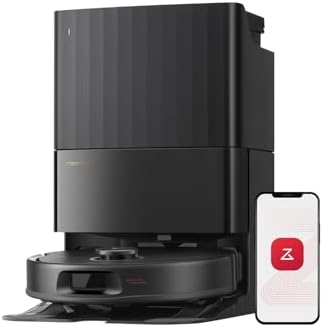
Roborock Qrevo S5V Robot Vacuum and Mop (12,000Pa, FlexiArm)
5.0
12,000Pa suction · FlexiArm dual mops · 180 min runtime
A near-flagship performer at a mid-range price, with 12,000Pa suction that removed 92% of sand embedded in carpet in expert testing (a top-5 result among 150+ robots), FlexiArm edge mopping, and a dock that empties, washes, refills and warm-air dries.
Our Best for Pet Hair pick: an anti-tangle DuoBrush that reviewers single out for long fur and cat hair, 13,000Pa suction and a 5-liter self-emptying dock rated for up to 75 days, at a budget-friendly price.
Dreame L40 Ultra Gen 2 Robot Vacuum and Mop (25,000Pa)
4.8
25,000Pa suction · Extendable DuoScrub mops · 231 min runtime
The highest suction in this lineup at 25,000Pa, with extendable DuoScrub spinning mops, roughly 99% hard-floor debris pickup in testing, and this lineup's longest runtime at up to 231 minutes.
Roborock Saros 10R Robot Vacuum and Mop (22,000Pa, Ultra Slim)
4.8
22,000Pa suction · Dual spinning mops · 3.14 in slim body
This flagship brings 22,000Pa suction, an ultra-slim 3.14-inch body that slides under furniture, and StarSight 2.0 navigation that earned a Best Obstacle Avoidance award in expert testing. It was 38% off at our last scan.
eufy X10 Pro Omni Robot Vacuum and Mop (8,000Pa, Self-Washing Dock)
4.8
8,000Pa suction · Dual rotating mops · Self-washing dock
An 8,000Pa suction unit with dual rotating mop pads that auto-lift on carpet and a camera-based AI.See system rated to recognize over 100 household obstacles. The all-in-one dock empties, washes, and hot-air dries itself between runs.
eufy C28 Omni Robot Vacuum and Mop (15,000Pa, HydroJet Roller)
4.7
15,000Pa suction · HydroJet roller mop · 140 min runtime
eufy's self-cleaning HydroJet roller mop backs up a flawless anti-tangle result on 7-inch hair and perfect pickup of 2.5-inch pet hair in testing, alongside a top-10 mopping score in Vacuum Wars' entire test database.
Short on time? These three cover most buyers: our Best Overall flagship, the best value combo with a hot-water mop-washing dock, and the pet-hair pick with an anti-tangle brush for shedding homes.
Best Overall
roborock Qrevo S Pro
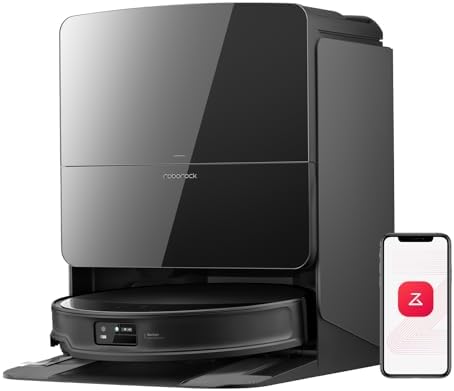
roborock Qrevo S Pro Robot Vacuum and Mop (18,500Pa, Multifunctional Dock)
Robot Vacuum & Mop Combos 101: What They Do & How to Choose
Understand the category before you buy - what the science actually says, and which specs matter.
Every combo lists a big suction number and calls itself a mop, but the mopping system, not the pascals, is what usually decides whether your floors come out clean. Here is how these robots work, why the mop design matters more than anything else, and the features worth comparing before you buy.
What does a robot vacuum and mop combo actually do?
A combo robot rolls across your floor doing two jobs. It pulls debris off hard floors and carpet with a spinning brush and suction, then wets and wipes the hard floors to lift the sticky film that vacuuming leaves behind. The best ones do this in one pass and manage the messy parts themselves.
It maps your home, usually with a spinning LiDAR sensor, and cleans in tidy rows instead of bouncing around at random.
It vacuums first, then mops, so it is not pushing dry dirt into wet streaks.
It returns to a dock that can empty the dustbin, rinse and dry the mop, and refill the tank so you touch it as little as possible.
The mopping system is the real differentiator
Here is the thing most shoppers miss: on a combo robot, the mop is where the money and the disappointment both hide. "Mop" covers a huge range. At the low end sits a flat pad that some cheaper robots drag behind them, which wipes but does not scrub and tends to smear on anything sticky. In the middle are sonic vibrating pads like the VibraRise system on the roborock Q10 S5+, which shake fast enough to loosen dried spills. At the top are spinning mops that press down and buff the floor, such as the dual spinning mops on the DREAME L40 Ultra Gen 2 and the FlexiArm edge mops on the roborock Qrevo S5V, plus the dual spinning mops on the roborock Saros 10R that press down with real downward force rather than just dragging along the floor.
Two details separate a mop that helps from one that makes things worse. The first is mop lift on carpet: good robots raise the pad when they roll onto a rug, from 10mm on the roborock Qrevo S5V up to 10.5mm on the DREAME L40, and some models also drop a mechanical brush cover over the roller once they sense carpet, so they do not soak your carpet. The second is a self-washing dock that rinses and dries the pad between runs. Judge the mop system first, then look at navigation and suction.
Which specs actually matter?
Mop type: Spinning or vibrating mops scrub; a flat drag pad mostly smears. This is the single biggest quality lever, so weight it heavily.
Mop lift on carpet: Auto-lift, roughly 10mm to 10.5mm on the models that list it, keeps a wet mop from soaking your rugs during the same run.
Self-wash and auto-refill dock: A dock that washes and dries the pad and refills the tank, like the eufy Omni Station or the DREAME all-in-one dock, is what makes a robot truly hands-off. Self-empty-only docks still leave you rinsing the mop yourself.
Suction in pascals: More matters for carpet and pet hair. Among the models with published figures, this lineup runs from 10,000Pa on the roborock Q10 S5+ up to 25,000Pa on the DREAME L40 Ultra Gen 2.
Navigation: LiDAR mapping, used across this lineup, gives clean rows and reliable room memory. Pair it with obstacle avoidance so the robot dodges cords and toys instead of dragging them.
Self-empty dock: An auto-empty bin means weeks between touches, from a 2.7L bag rated up to 70 days on the roborock Q10 S5+ to the largest 4L bag here on the DREAME D20 Air Plus.
Runtime: Bigger homes need longer legs, from up to 140 minutes on the eufy C28 Omni to 231 minutes on the DREAME L40 Ultra Gen 2.
How we grade products
Graded Picks rankings are aggregated from several independent signals: verified buyer ratings and the size of the review base for credibility, recent monthly purchase volume for relevance, assessments from trusted home and cleaning publications, and how each product places in leading category lineups. For robot vacuum and mop combos we weigh:
Mopping system quality and carpet mop-lift
Suction power on carpet and pet hair
Dock capabilities, self-washing and self-emptying
Navigation accuracy and obstacle avoidance
Runtime and coverage for larger homes
Anti-tangle brush design for pet hair
Overall value for the price
Setup and maintenance note: Even a self-cleaning dock needs a hand now and then. Plan to empty the dust bag every few weeks, refill and empty the water tanks, and wipe the dock tray so it does not grow mildew. Clear cords, socks, and small toys before a run, since obstacle sensing helps but does not catch everything, and give the robot a good first mapping run so it learns your rooms before you rely on it.
In-Depth Reviews
Everything we learned from buyer reviews and expert testing, product by product.
roborock Qrevo S Pro
Best Overall21% OFF
1. roborock Qrevo S Pro Robot Vacuum and Mop (18,500Pa, Multifunctional Dock)
5.0
The Qrevo S Pro is our Best Overall pick because it pairs class-leading suction with a high-end dock at a reasonable price. It pairs two liftable, rotating mop pads with 18,500Pa of suction and a base that washes both pads in water up to 167 degrees and dries them with warm air, a hygiene cycle reviewers note is rare at this price tier. LiDAR-based navigation maps multiple rooms quickly and steers cleanly around cords, pet toys and furniture legs, and Reactive Tech obstacle avoidance adds another layer of caution on cluttered floors. An anti-tangle brush and a washable filter keep pet-hair households from needing much upkeep between empties, and the 2.7-liter self-emptying base bag stretches the interval between dustbin changes. Reviewers flag two real trade-offs: it skips a side brush and edge-mop extension, so tight baseboards and corners get less attention, and the dock's emptying cycle runs louder than the robot's regular pass. For mostly hard-floor, multi-room homes where fast mapping and mop hygiene matter, it is a genuinely accessible way into a higher-end feature set.
2. Roborock Qrevo S5V Robot Vacuum and Mop (12,000Pa, FlexiArm)
5.0
The Qrevo S5V is a strong all-around performer: at $599.99 after a 44% discount, it delivers cleaning results that expert testers found rivaling flagship robots costing twice as much. Vacuum Wars measured 92% removal of sand embedded in medium-pile carpet, the 4th best score among more than 150 robots tested, plus 92% pet-hair pickup against an 81% category average, and its dual spinning FlexiArm mops cleared both dry and wet stains at 100% accuracy. The multifunctional dock does everything: self-emptying, mop washing with warm-air drying, and automatic tank refilling, while the robot itself runs a reasonable 64 dB with up to 180 minutes per charge. The honest weakness is obstacle avoidance: its Reactive Tech sensors dodged only 6 of 24 test objects versus a 17-object average, so cables and socks need picking up first. It also costs more than the Qrevo S Pro ranked above it, which makes it best for buyers who want its proven carpet and stain results specifically.
3. Dreame D20 Plus Robot Vacuum and Mop (13,000Pa, Self-Emptying)
4.9
The D20 Plus is our Best for Pet Hair pick. Its HyperStream DuoBrush is repeatedly praised for handling long dog fur and cat hair without forming tangles, an area where several rivals struggle. Reviewers at VacuumChef and VacuumRovers point to strong suction for the price at 13,000Pa, paired with an LDS LiDAR turret for centimeter-precise 5 cm grid mapping. The auto-empty dock uses a 5-liter, E12-rated dust bag that holds up to 75 days of debris and HEPA-filters 99.99% of particles down to 0.3 microns. The honest tradeoffs: the dock only empties the bin, with no mop washing, drying or refilling, so the single mop pad has to come off before it can clean carpet, and obstacle avoidance is basic rather than the 3D systems on pricier robots. It is the pick for shedding pets where hair pickup matters more than deep mopping.
Suction power13,000Pa
Mopping systemSingle mop pad, manual removal for carpet
Runtime (per charge)Up to 180 minutes
Dock capabilitiesAuto-empty only (5 L bag, up to 75 days)
4. Dreame L40 Ultra Gen 2 Robot Vacuum and Mop (25,000Pa)
4.8
The L40 Ultra Gen 2 delivers the highest suction rating in this comparison at 25,000Pa, and expert testing found the power translates: roughly 99% debris pickup on hard surfaces, with fast, accurate LiDAR mapping and smooth navigation throughout. Its signature trick is reach, both the side brush and one mop arm extend outward dynamically, pulling debris from corners about 4cm deeper than fixed designs, and the TriCut anti-tangle brush now ships standard. The all-in-one dock self-empties, washes and hot-air dries the mops, and the 231-minute runtime is the longest here. Reviewers' reservations are worth knowing: obstacle avoidance is a step back from the previous generation (the RGB AI camera was removed), and the 10.5mm mop lift can dampen high-pile rugs during transitions. For mostly-hard-floor homes with low carpet, it is a corner-cleaning powerhouse at $569.99 after 33% off.
The Saros 10R earned high marks in expert testing: Vacuum Wars called it the best robot vacuum it had seen to date, thanks to its ultra-slim profile and advanced navigation. It has 22,000Pa suction, a 3.14-inch ultra-slim body that cleans under beds and sofas other robots bump into, and the StarSight 2.0 system, 3D time-of-flight sensing plus an RGB camera, that earned a Best Obstacle Avoidance award for reliably weaving around cables, toys and low furniture. Testers measured 92% flattened pet-hair pickup on carpet with 0% brush tangling, and RTINGS, TechGearLab and Apartment Therapy all reviewed it favorably as one of 2026's smartest robots. The dock covers self-emptying, mop washing and hot-air drying. The trade-offs are a mopping performance that tests rated above average rather than class-leading, trouble crossing door thresholds around 1.4 inches, and the highest price here at $1,299.99 even after a 38% discount at our last scan.
6. eufy X10 Pro Omni Robot Vacuum and Mop (8,000Pa, Self-Washing Dock)
4.8
The X10 Pro Omni pairs a top-mounted dToF LiDAR sensor with a front-facing AI.See camera, and testers have found it maps a typical floor plan in about five minutes while steering around cables, slippers, and other common clutter. Dual mop pads spin at 180rpm with roughly 1kg of downward pressure, and advertised specs put the carpet auto-lift height at 12mm so the pads stay dry when the robot crosses from hard floor to rug. Its all-in-one dock handles emptying, mop washing, hot-air drying, and clean-water refill, trimming the manual upkeep that comes with a standalone robot. Reviewers have rated its suction and mapping strong for the price, though its 8,000Pa rating is modest next to the higher-suction flagships in this lineup, and the dock itself is on the larger side for small utility closets.
7. eufy C28 Omni Robot Vacuum and Mop (15,000Pa, HydroJet Roller)
4.7
The C28 Omni is built around eufy's excellent HydroJet self-washing roller, which sprays fresh water while collecting dirty water separately, and testing backs up the pet-hair claim directly: perfect pickup of 2.5-inch pet hair and a flawless anti-tangle result with 7-inch strands, one of the strongest documented pet-hair results among robots in this category. The mopping results are the broader headline too: a 270 RPM roller speed with 9.8N of downward pressure earned a combined mopping score in the top 10 of Vacuum Wars' entire test database, and it left only about a quarter as much water behind as the average robot. Vacuuming holds up as well, with an 89% carpet deep-clean score, and it avoided 15 of 24 test obstacles, a real edge over robots using basic structured-light sensors, even if it falls short of the category's very best. Its real compromises are a shorter runtime at 140 minutes, a taller body that skips low furniture slimmer robots can slide under, and less raw suction than eufy's own pricier flagship models.
The stars you see are the Graded Picks cumulative score, not a single retailer's average. It blends verified buyer reviews aggregated across major retailers, assessments from professional reviewers and expert testers, and how prominently the product features in leading category lineups.
Advertising Disclosure
Our rankings are compiled by aggregating several independent signals, including verified buyer feedback, how popular a product currently is with shoppers, and evaluations published by professional reviewers. Editorial opinions are our own.
Please note that we participate in affiliate marketing programs. When you purchase through links on our site, we may earn a commission. As an Amazon Associate we earn from qualifying purchases. This comes at no additional cost to you and helps support the resources required to provide valuable content.